In this article:
Artificial intelligence (AI) for small to medium businesses is becoming part of a broader conversation about improving productivity, serving customers more effectively, and finding new growth opportunities. Once largely associated with technology teams, AI is now relevant across functions such as marketing, customer service, administration, and operations.
This potential is already taking shape. A 2025 Intuit QuickBooks study found that 68% of small businesses use AI, with 74% reporting improved productivity.1 These gains are particularly relevant in the Philippines, where small and medium enterprises (SMEs) account for more than 95% of registered businesses.2

Still, adopting AI can raise concerns around cost, technical complexity, and its impact on jobs. Using the technology does not have to mean replacing people or overhauling an entire operation. Applied to the right tasks, AI can reduce repetitive work and give lean teams more time for customers, important decisions, and other priorities.
As technology continues to change how companies operate, Globe Business helps Filipino SMEs stay ready with reliable connectivity and digital solutions that support their evolving needs. With AI becoming part of that shift, this guide explores practical ways SMEs can engage with the technology and help their teams adopt it effectively.
Start with the Right Mindset
For many SMEs, integrating AI into their digital transformation journey can raise questions before the technology is even used.
- “Where to begin?”
- “How technical might AI be?”
- “How much could it cost?”
- “Can AI-generated results be trusted?”
- “How could AI affect employees?”
This growing interest is reflected in AI adoption among Philippine businesses. The Philippine Institute for Development Studies (PIDS) found that while 90.8% of establishments own computers and 81% have internet access, only 14.9% use AI tools.3
The gap shows that being digitally connected does not automatically make an organization ready for AI. Adoption also takes familiarity with the technology and an understanding of where it can provide practical value.
Adapting to new technology is nothing new. Even many of the tools we use in our daily operations today had an initial learning curve.
- Cash registers streamlined transactions.
- Email has changed business communication.
- Online banking made financial tasks more convenient.
- Social media created new ways to reach customers.
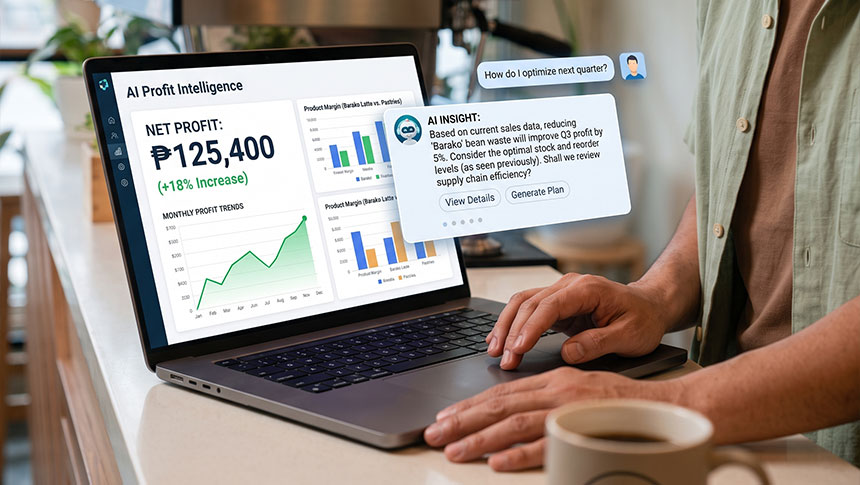
Small businesses can tap into AI to simplify day-to-day tasks and improve productivity. It can start with practical applications that make sense for everyday work.
- Summarizing customer feedback
- Creating first drafts of proposals
- Analyzing sales patterns
- Generating frequently asked questions (FAQs) from existing product information
These applications can reduce repetitive work and give teams more time to focus on customers, problem-solving, and important decisions.
Most importantly, AI does not have to replace employees to create value. Businesses can use it as a valuable partner, allowing their people to focus on what they do best.
Like an extra pair of hands for routine work, AI can make everyday tasks more efficient while keeping human judgment, relationships, and creativity at the center of the organization.
Guide AI with the Right Context
Prompting is the process of giving AI instructions about what to do and how to respond. A prompt can be as simple as a question or as detailed as a brief that includes the task, audience, context, tone, and desired output.
Learning the basics of prompting can make AI more useful for everyday work. Since AI does not automatically know the company, its customers, or the purpose behind a request, the information included in a prompt helps shape the response. The goal is not to master complicated commands, but to provide enough direction for AI to produce a useful response.
For example, instead of inserting: “Create a Facebook post about my café business,” a more detailed prompt could be: “Write a Facebook post promoting my café’s new iced coffee to office workers aged 25 to 40. Use a friendly tone and include a call to action to visit the café.”
The second prompt provides more direction by defining the product, audience, tone, and goal. For SMEs learning how to use AI for small-business marketing, providing this context can help generate content better aligned with the intended audience and purpose.
The same approach can be applied to other tasks by keeping a few prompting practices in mind.
- Be specific about the task. Define exactly what the AI should produce, whether it is an email, a caption, a summary, a checklist, or a set of ideas.
- Add relevant context. Include information about the business, product, customer, or situation that can help shape the response.
- Set clear requirements. Specify the tone, length, format, and any information that should be included or excluded.
- Set the right perspective. Tell the AI who the response is for and what it should focus on.
- Provide an example. Show a sample headline, response, or format to make the expected output clearer.
- Refine the prompt when needed. Adjust the instructions when the first response misses the mark, then continue refining until the output fits the task.
Make AI a Business Ally
Small to medium business owners often wear many hats, moving between customer service, marketing, sales, operations, and planning in the same day. With so many responsibilities to manage, technology can provide additional support, freeing up time for strategy, product improvement, and growth.
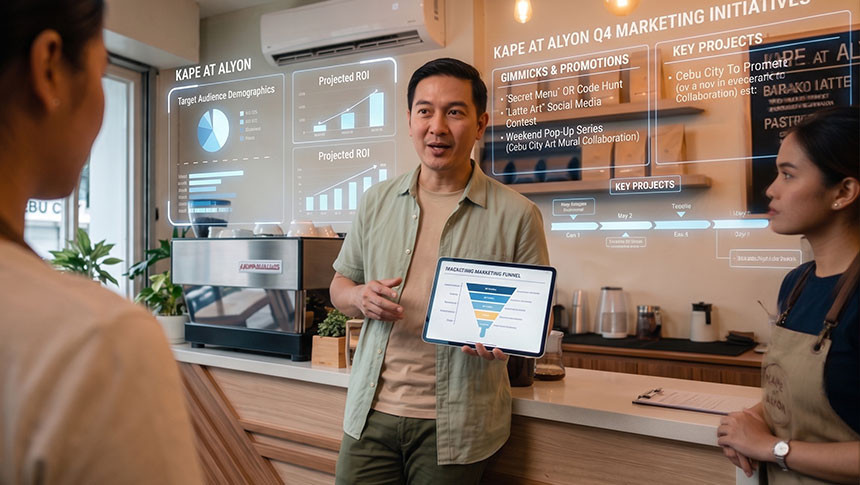
In practice, AI for small business owners can support everyday operations in several ways.
- Customer Support: Chatbots can respond to common inquiries, provide basic product information, and improve service availability. This gives teams more time to handle concerns that require context and personal attention.
- Marketing and Content Creation: AI can help draft product descriptions, emails, and blog posts, and brainstorm campaign concepts, product names, taglines, and presentation ideas.
- Inventory Management: Demand forecasting can provide a clearer view of inventory needs, helping teams plan stock levels and determine when products may need replenishment.
- Sales Forecasting: Historical sales data can reveal patterns and potential trends, providing useful input for sales planning, inventory decisions, and other priorities.
Keep the Human Touch
The push for efficiency often leads organizations to automate more processes and shift customer touchpoints to technology. While AI can make many interactions easier to manage, not every customer situation should be handled the same way.
Delays, mistakes, complaints, and other sensitive concerns often call for the empathy and judgment that help customers feel heard and understood.
A better approach is to use AI to streamline processes while keeping human connection at the heart of the business. AI can handle straightforward interactions and provide support behind the scenes, while employees focus on situations that require understanding, reassurance, and personal attention. This allows SMEs to improve efficiency while building trust through meaningful human interactions.
The same principle applies to customer communication. AI-generated marketing content may provide a useful starting point, but the final message should still reflect the brand’s voice, values, and personality.
Before using AI-generated content, it is worth considering the message through the lens of the brand and the customers it is meant to reach. A few questions can help guide the review.
- “Does it sound like the brand?”
- “Does it reflect the organization and its values?”
- “Does it feel natural and genuine?”
As AI becomes more common, the human qualities behind an organization matter even more. Bringing empathy, authenticity, and personal attention to customer interactions and communication can help SMEs strengthen trust and create experiences that technology alone cannot provide.
Amplify What Entrepreneurs Do Best
AI is here to stay, but that does not make entrepreneurship any less human. The opportunity lies in using technology to create more room for the creativity, experience, and judgment that move an organization forward.
One way to create that space is by using technology for repetitive or data-heavy work. Organizing information, surfacing patterns, and providing useful starting points can lighten the demands on lean teams, allowing teams to focus on customers, important decisions, and growth opportunities.

The key is knowing where that support adds the most value. Not every task requires technology, and tools should fit operational needs, not the other way around. SMEs should remain involved where their perspective, experience, and judgment matter most.
When that balance is right, people and technology can complement each other rather than compete. For SMEs, this can create more capacity to serve customers, strengthen relationships, pursue new ideas, and grow with purpose.
Build the Digital Foundation that AI Depends On
AI cannot make up for weaknesses in the technology around it. While AI can add a layer of intelligence to business operations, it still relies on the digital foundation that supports those operations.
This foundation brings together reliable business internet, cloud platforms, data, security, and business applications to support everyday operations and create an environment where AI can deliver greater value.
These capabilities become increasingly important as businesses expand their use of AI. What begins with a few simple applications may eventually extend across more areas of the business, increasing the need for a reliable and scalable digital foundation.
For SMEs looking to strengthen these essentials, Globe Business small business starter solutions offer a practical starting point, with connectivity and digital solutions that can support their evolving technology needs. When you’re ready to explore solutions to support your AI journey, talk to a Globe Business expert today and invest in the digital foundation that your business needs.
Sources
1https://quickbooks.intuit.com/r/running-a-business/ai-for-small-business
2https://bworldonline.com/special-features/2025/11/10/710803/empowering-msmes-through-financing-digital-tools-and-upskilling
3https://www.pids.gov.ph/details/news/press-releases/ph-businesses-lag-in-ai-adoption-despite-digital-access-pids