In this article:
Business continuity has become a business imperative. From natural disasters and infrastructure failures to cyber incidents and operational outages, organizations today are expected to continue serving customers despite disruption.
For businesses in the Philippines, the challenge is even greater. Operations are increasingly spread across offices, project sites, field locations, and remote environments. At the same time, natural hazards and infrastructure disruptions remain an ongoing reality.
According to ISO 22301, business continuity is an organization’s ability to continue delivering products and services at acceptable predefined levels following a disruptive incident.1 Today, however, business continuity is no longer measured only by how quickly organizations recover. Increasingly, it is also measured by how effectively they continue operating during disruption.
Business Continuity Matters in the Philippines

Business operations have become more connected than ever before. Employees collaborate across locations, field teams depend on real-time updates, and business decisions increasingly rely on continuous access to information.
However, organizations face a growing range of operational risks. The World Economic Forum’s Global Risks Report 2025 identifies cyber threats, infrastructure disruption, and extreme weather among today’s most significant global business risks.2
For Philippine businesses, where operations are often geographically dispersed and natural hazards are common, these disruptions can quickly affect productivity, customer service, and operational performance.
As businesses become more distributed, maintaining continuity is no longer just about protecting systems or facilities. It is about ensuring people can continue coordinating when conditions change.
Five Business Continuity Strategies Every Organization Should Consider

- Prioritize mission-critical operations.
Not every business function has the same operational impact.
Identify the processes that are essential to serving customers, generating revenue, meeting regulatory requirements, and protecting employee safety. These should remain the highest priority during any disruption.
Understanding what matters most allows organizations to allocate resources and recovery efforts where they create the greatest business value.
Build and regularly test your business continuity plan.
A business continuity plan should be established before disruption occurs—not created in the middle of a crisis. An effective plan defines various factors.
- Incident response procedures
- Roles and responsibilities
- Escalation paths
- Recovery priorities
- Internal and external communication protocols
Regular testing ensures plans remain relevant as business operations, technologies, and risks continue to evolve.
Strengthen layered connectivity and infrastructure resilience.
Business continuity depends on resilient technology.
Organizations should strengthen the systems that support daily operations by investing in these aspects.- Cybersecurity controls
- Data backup and recovery
- Cloud resilience
- Infrastructure redundancy
For businesses in the Philippines where operations often span islands, remote communities, and geographically diverse environments, layered resilience is becoming increasingly important.
Different business solutions such as mobile connectivity, internet access, and core data services can complement one another as part of a comprehensive business continuity strategy.
These capabilities help reduce downtime and enable faster recovery when technology or infrastructure is affected.
- Design operations that can adapt.
Today’s workforce no longer operates from a single location.
Employees may work across headquarters, branch offices, customer sites, project locations, or remote environments. Business continuity plans should account for this reality by enabling employees to continue accessing systems, collaborating with teams, and carrying out critical work regardless of location.
For industries such as logistics, agriculture, mining, utilities, and government, operational flexibility is no longer optional—it is fundamental to maintaining business continuity.
- Strengthen communication resilience.
A business continuity plan is only effective if people can execute it.
During a disruption, teams need to share information, coordinate decisions, mobilize resources, and respond quickly to changing conditions. Without reliable communication, operational visibility is reduced and response efforts become significantly more difficult.
Many organizations still rely primarily on terrestrial connectivity. When operations extend beyond its reach or networks become unavailable, coordination across headquarters, field teams, and remote operations can become more difficult. Building communication resilience means having additional ways to stay connected when traditional networks cannot.
Business Continuity in Action Across Industries
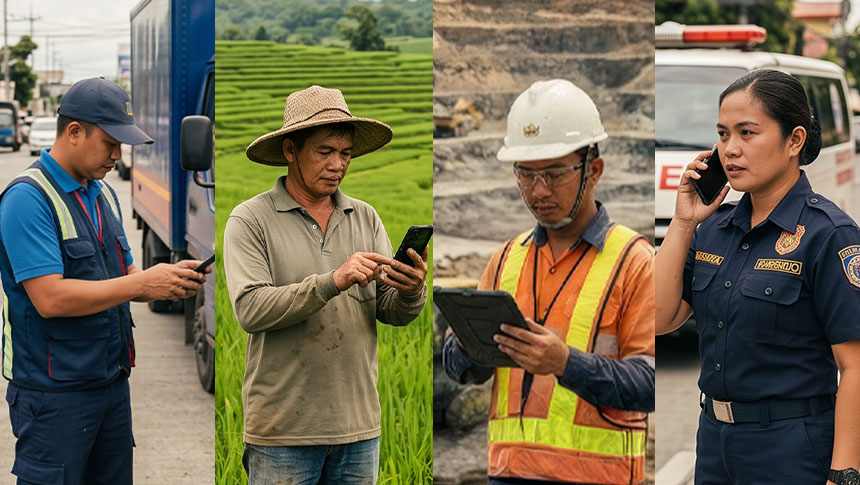
Every industry faces different operational challenges, but maintaining coordination during disruption remains a common priority.
Logistics and Transportation
Logistics providers need continuous visibility into vehicles, deliveries, and route conditions. Maintaining connectivity enables operations teams to reroute shipments, respond to delays, and keep customers informed when circumstances change.
Agriculture
Agricultural operations often span large rural areas where teams, equipment, and assets are widely distributed. Reliable connectivity supports field coordination, remote monitoring, and faster operational decision-making.
Mining
Mining operators depend on close coordination between remote field teams and central operations. Maintaining connectivity helps support worker safety, operational visibility, and more efficient site management.
Public Sector and Emergency Response
Mining operators depend on close coordination between remote field teams and central operations. Maintaining connectivity helps support worker safety, operational visibility, and more efficient site management.
Supporting Business Continuity with Satellite-Powered Connectivity
Traditional business continuity planning has focused on protecting facilities, systems, applications, and data. As operations become more distributed, organizations must also consider how teams will continue coordinating when terrestrial connectivity is unavailable.
The International Telecommunication Union (ITU) recognizes satellite technologies as an important complement to terrestrial networks, extending connectivity to underserved or difficult-to-reach areas while strengthening communication resilience.3
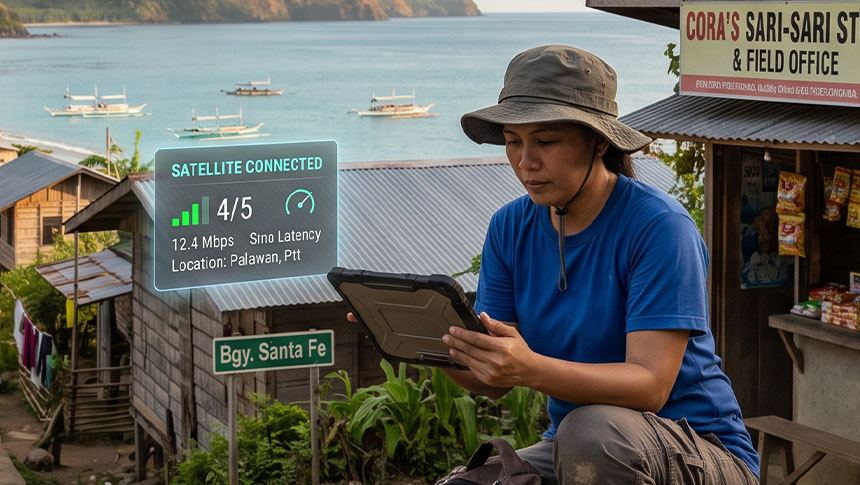
Satellite-powered connectivity complements existing network infrastructure by providing an additional layer of connectivity that helps organizations.
- Maintain communication across remote operations
- Improve coordination between distributed teams
- Extend connectivity beyond traditional network coverage
- Support continuity for critical business functions
Rather than replacing terrestrial networks, satellite-powered connectivity complements existing terrestrial networks, providing an additional layer of resilience that helps organizations stay connected when traditional infrastructure is disrupted.
Building a More Resilient Enterprise
Business continuity is ultimately about ensuring organizations can continue operating when disruption occurs.
As businesses become more digital, connected, and geographically distributed, resilience extends beyond protecting technology and infrastructure. It also requires enabling people to stay connected, so they can coordinate decisions, manage operations, and respond effectively when it matters most.
By complementing existing connectivity with satellite-powered solutions, Globe Business helps organizations strengthen communication resilience, support operational continuity, and stay connected across more locations—helping businesses move forward with greater confidence.
Explore how Globe Business satellite-powered connectivity can help build a more resilient business continuity strategy for your organization.
Sources
1https://www.iso.org/standard/75106.html
2https://www.weforum.org/reports/global-risks-report-2025
3https://www.itu.int/hub/2020/04/how-satellites-can-help-connect-the-unconnected