In this article:
- The Philippines as a Strategic Hub in the Global Digital Economy
- Data Centers and Subsea Cable Systems Accelerating the Country’s Digital Progress
- Financial Returns from Infrastructure Investments
- Emerging Trends in Cloud Adoption
- Collaborations or Partnerships to Support Infrastructure Growth
- Globe Business Projects that Further Strengthen the Digital Infrastructure
- Powering a Future-Ready Philippines with Globe Business
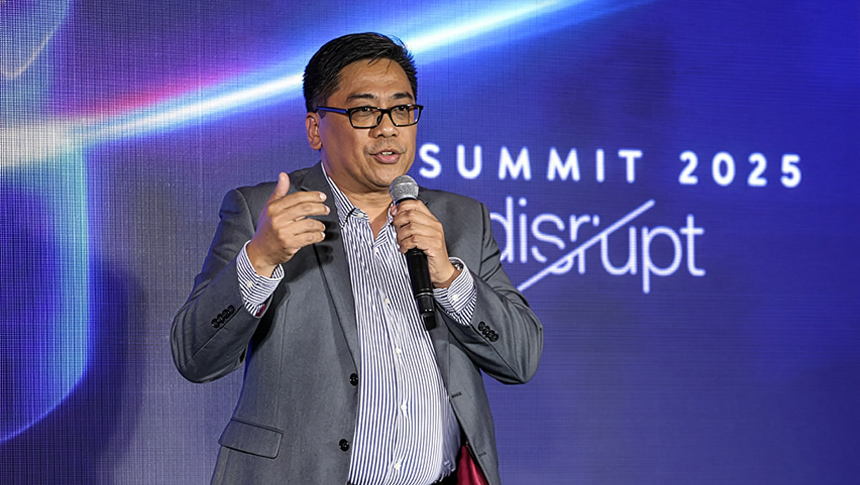
As the digital economy rapidly reshapes industries and global markets, countries across Southeast Asia are positioning themselves to become critical hubs for innovation, data, and connectivity. The Philippines, with its growing digital consumption and strategic location, is emerging as a key player in this evolving landscape.
In a previously published interview with Telecom Review Asia,1 Raymond Policarpio, Vice President and Head of Strategy Management and Business Investments at Globe Business, the enterprise arm of Globe Telecom, shared insightful perspectives on the Philippines’ emergence as a strategic hub in the global digital economy.
Telecom Review Asia: How do you see the Philippines positioning itself as a strategic hub in the global digital economy, and how is Globe Business contributing to this growth?
Raymond Policarpio: The Philippines is well-positioned to become a major regional hub, given its high volume of data consumption and production. The Philippines ranks among the top data users, particularly on platforms such as Meta and YouTube. However, becoming a true hub requires the right infrastructure.
Even as other Southeast Asian countries like Malaysia and Indonesia develop into regional hubs, alongside Singapore and Hong Kong, the Philippines boasts significant strengths in its strategic location and a demographic sweet spot: a large, predominantly working-age population. The main challenge that remains is building the necessary infrastructure.
At Globe Business, we’re focused on solving that challenge. We invest heavily in modernizing and expanding our digital backbone, from domestic fiber networks to international subsea cables. We’re also investing in cable landing stations (CLS) and data centers, ensuring our infrastructure is modern, reliable, and future-proof. These investments support the country’s data growth and position the Philippines strategically in the global digital economy.
Telecom Review Asia: Let’s dive deeper into data centers and subsea cable systems. How do you see these developments accelerating the country’s digital progress?
Raymond Policarpio: Data is the most valuable commodity today, but it needs a receptacle, a way to be stored and accessed. Whoever controls a significant share of that infrastructure holds a larger stake in the business. It’s a “build-it-and-they-will-come” situation. A huge volume of data already traverses the Philippines. Imagine how much more once we build larger, more advanced receptacles—that’s where data centers come in. Access to this data is equally crucial, and that’s where cable systems, domestic and international, play a key role.
We’ve been actively building these data centers through our subsidiary, STT GDC Philippines, and forming partnerships and consortia for infrastructure development locally and abroad. We believe this will significantly enable the country’s digital acceleration.
Last year, we launched the domestic submarine cable network to support growing local data traffic. Internationally, we’re working on several systems. One of them, the Asia Link Cable (ALC), is expected to connect us with regional hubs such as Singapore and Japan by 2026/2027. Beyond that, we have a few more cable systems underway, all focused on futureproofing the country’s digital backbone. The traffic is here and growing, so the infrastructure must scale with it to sustain acceleration.
We also recognize that infrastructure has always been the primary challenge for the Philippines in becoming a regional hub. It’s a shared issue influenced by government, power, real estate, culture, and competence. All these factors need to align to drive the kind of infrastructure growth that will power digital progress, and that’s something we at Globe Business are deeply committed to.
Telecom Review Asia: Could you expand on the financial returns from these infrastructure investments and their role in advancing sustainability goals?
Raymond Policarpio: It’s interesting how we’re set up here at Globe Business. I currently lead Globe Business Strategy Management, which focuses on both the short- and long-term direction of the business. Under my team is the Strategic Infrastructure Group, underscoring our holistic and strategic approach to investments.
More than profitability, we focus on the outcomes. We ask ourselves, “What’s the value of what we’re doing?” Take subsea cables, for example. When you decide to build one today, it comes online in five to seven years. Therefore, we need a clear vision that outlines its value. Demand and profiles may shift, but placing that system in the right location at the right time will create benefits, not just for Globe Business, but for the country as a whole.
When evaluating infrastructure investments, we assess how they’ll increase customer usage, which in turn leads to increased utilization, monetization, and ultimately, profit. Our foremost priority, however, is sustainability, nation-building, and expanding access for both consumers and enterprises. That’s how we measure value; it’s strategic, not purely financial.
Telecom Review Asia: What trends are emerging in cloud adoption among local businesses, and how is Globe Business supporting this shift?
Raymond Policarpio: I always go back to data, because the explosion of data consumption and contribution from both consumers and businesses drives cloud adoption. This growing data ecosystem naturally leads to cloud, cybersecurity, and AI (artificial intelligence), with data at the core.
We’re seeing cloud adoption accelerate, especially among large enterprises, driven by cloud economics and operational efficiency. What’s exciting is the growing adoption among SMEs (small and medium-sized enterprises). While many may not fully understand cloud, they’re already using it through AI-powered tools and cloud-based apps, thanks to platforms like Google and Microsoft democratizing access.
At Globe Business, we support this by offering end-to-end solutions that span connectivity and infrastructure, cloud, and security. And, beyond that, we offer consulting services, particularly for SMEs that have initiated their digital transformation but require guidance on their next steps. We guide them in choosing the right solutions and securing their data, helping them grow. Ultimately, their success is our success, and I believe that cloud and AI will soon be deeply embedded in everyday business.





Telecom Review Asia: What factors guide Globe Business’ decision-making process when choosing collaborations or partnerships, both internally and with external partners, to support infrastructure growth?
Raymond Policarpio: Collaboration is critical for us at Globe Business. The telco industry has long been highly competitive, we’ve realized that true infrastructure growth can only occur through collaboration, not collusion. Partnerships must be built on shared goals. Major infrastructure projects, such as cable systems, require consortia. If we can work with global players, we believe in doing the same with domestic partners, vendors, and government agencies.
Telecom Review Asia: Could you share projects that Globe Business is working on to strengthen the country’s digital infrastructure further?
Raymond Policarpio: We’re focusing on strengthening the country’s digital infrastructure through several key projects. One major initiative is the Philippine Domestic Submarine Cable Network, built in partnership with two local partners. This fully fiberized, modern, and redundant backbone addresses the unique challenges of our archipelago, ensuring reliable connectivity across the country.
We continue to expand our fiber footprint for both consumers and enterprises nationwide. Internationally, we’re adding more cable landing stations to prepare for the growing data demand from global players such as Microsoft, Google, and Meta.
ALC will boost capacity, connecting the Philippines to key hubs such as Singapore and Japan. This aligns with the shifting internet traffic patterns toward these regions, influenced by geopolitical changes. Lastly, ongoing investments in data centers remain a priority to support this growing digital ecosystem.
Powering a Future-Ready Philippines with Globe Business
As data consumption accelerates and digital ecosystems become more interconnected, the Philippines is steadily positioning itself as a strategic gateway in Southeast Asia’s digital economy. Achieving this ambition requires long-term investment, coordinated partnerships, and infrastructure that can scale with future demand.

Through its deliberate, outcomes-driven approach, Globe Business continues to strengthen the country’s digital backbone—from fiber networks and subsea cable systems to data centers that support cloud, AI, and next-generation services. By enabling enterprises and SMEs to confidently adopt emerging technologies, Globe Business plays a critical role in shaping a more resilient, globally competitive, and future-ready Philippines.
Source:
1https://www.telecomreviewasia.com/news/interviews/14015-globe-business-leverages-data-for-strategic-growth-in-the-digital-age


