In this article:
The biggest risk to your business may no longer be your infrastructure.
For years, enterprise security strategies have focused on protecting networks, servers, and cloud environments—the systems businesses directly control. But today, customers increasingly interact with businesses through different platforms. Aside from websites and e-commerce platforms, transactions now also happen on the company's mobile applications (apps).
From banking and payments to logistics and healthcare, mobile apps have become the primary channel for customer engagement, transaction processing, and service delivery. As their role in everyday digital interactions continues to grow, so do the opportunities for mobile app hacks and other security threats. According to a 2025 study by Statista, users now spend the majority of their mobile device time on apps, underscoring the critical role that mobile apps play in today's digital ecosystem.1
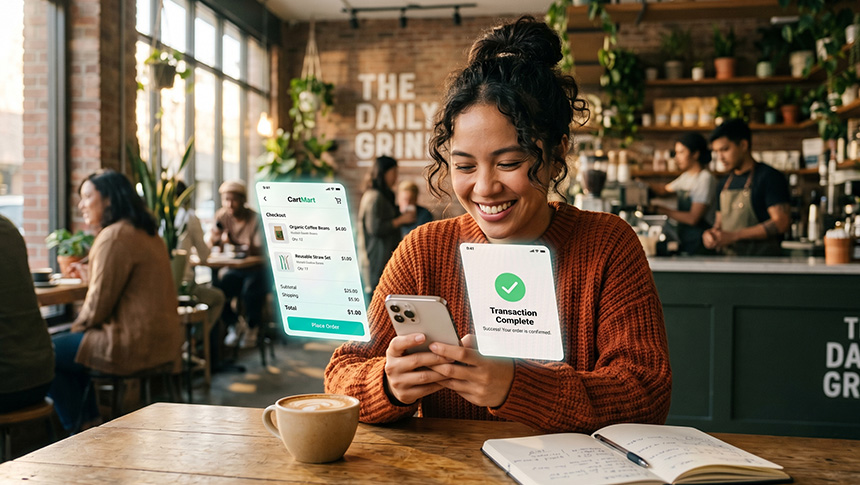
Yet while businesses have evolved, security strategies have not.
Most security measures are still designed around controlled environments—systems monitored and managed within the organization’s perimeter. Mobile apps do not stay within those controlled environments. Once downloaded, apps operate across devices, networks, and conditions that businesses no longer control. And it is within those uncontrolled environments where attackers increasingly operate.
What “Real-World” Attacks Actually Look Like
When people think about cyberattacks, they often imagine hackers breaking through servers or bypassing firewalls. Increasingly, however, attackers are targeting something much simpler: the mobile app itself. This shift reflects a broader trend identified in the Verizon Data Breach Investigations Report (DBIR), which found that attackers are increasingly targeting app layers and end-user environments rather than relying solely on traditional network-based attacks.2
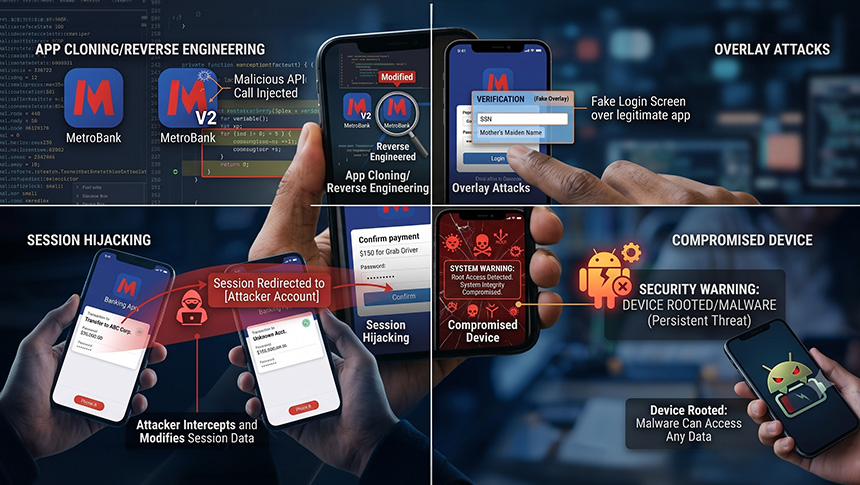
Four Ways Mobile Apps are Hacked
Here are the most common ways attackers target mobile apps on customer devices.
App Cloning and Reverse Engineering
Attackers can take a legitimate app, decompile and analyze its code, then create modified versions designed to bypass protections or inject malicious behavior. These cloned apps are often distributed through various channels.
- Unofficial app stores
- Phishing links
- Sideloaded installations
Once installed, they can expose Application Programming Interfaces (API), business logic, authentication flows, and sensitive data to attackers.
Overlay Attacks and Credential Theft
These attacks are particularly common in banking apps, e-wallets, and fintech platforms. In overlay attacks, malware places a fake screen on top of a legitimate app interface. To the user, everything appears normal, but behind the scenes, the malware silently collects sensitive information and compromises user accounts.
- Capturing login credentials
- Intercepting one-time passwords (OTP)
- Stealing sensitive information
Overlay attacks often begin with something seemingly harmless, such as a malicious link, a fake app download, or an app granted excessive permissions, including the ability to display over other apps or record on-screen activity. Once those permissions are enabled, attackers can manipulate what users see and interact with directly on their devices.
This threat vector continues to grow. The 2025 Zimperium Global Mobile Threat Report highlights a significant increase in mobile phishing and overlay attacks, particularly across Asia-Pacific markets.3 As organizations accelerate their digital transformation efforts, protecting mobile apps and the environments in which they operate has become an increasingly important component of enterprise cybersecurity strategies.4
Session Hijacking and Transaction Manipulation
Even when authentication is secure, attackers may exploit active sessions while the app is in use. This can involve intercepting session tokens, manipulating transaction flows, or altering user activity in real time. Because these attacks occur during live interactions, they often bypass traditional perimeter defenses entirely.
Exploiting Compromised Devices
Mobile apps also inherit the risks of the environments in which they operate. A user may unknowingly access an app through a rooted or jailbroken device, malware-infected device, or an unsecured public network.
In these environments, attackers can monitor user behavior, bypass security controls, and inject malicious activity directly into the app environment. This is why mobile app security must extend beyond the app itself and account for the risks posed by the devices and networks on which apps operate.
This broader threat landscape is reflected in Gartner's findings, which indicate that organizations that overlook endpoint and device-level risks significantly increase their exposure to app-layer attacks.5
The Real Risk: It is Not Just Technical
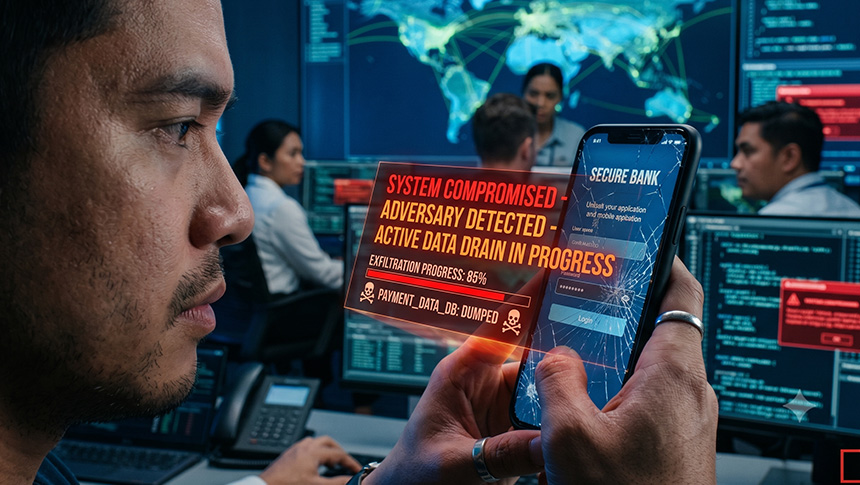
When mobile apps are compromised, the impact rarely stays confined to Information Technology (IT). A compromised app can disrupt transactions, expose sensitive customer information, and create friction across the customer experience. Because mobile apps often serve as the primary interface between businesses and users, the effects of a security incident quickly become visible to customers and can significantly damage trust.
For many customers, the mobile app is where the brand comes to life. When the experience is disrupted, the impact extends beyond the app itself; it affects customers' trust and perception of the brand. This connection between mobile app security and customer confidence is well established, with research from Guardsquare showing that app security directly influences user trust and long-term brand perception.6
Hacked Mobile App: Why Traditional Security Falls Short
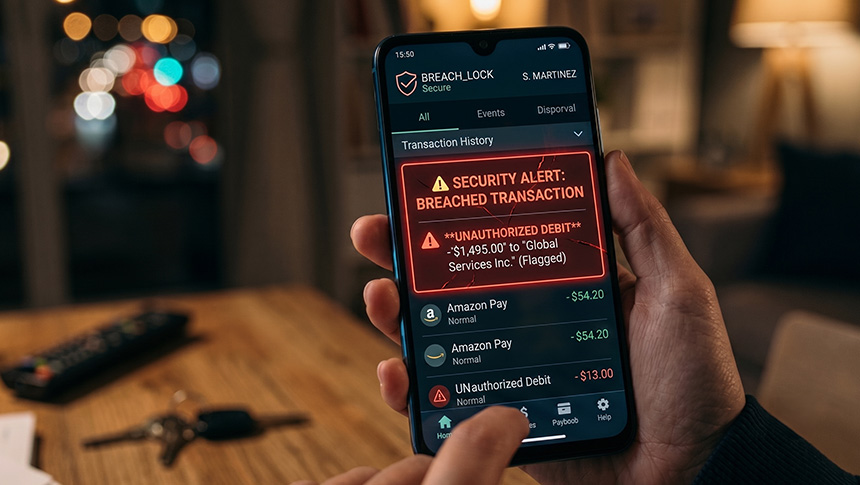
The issue is not that organizations are ignoring security. It is that most security strategies remain focused on protecting the wrong layer.
Traditional approaches prioritize infrastructure, backend systems, and pre-launch validation. But modern attacks increasingly occur in areas where organizations have less visibility and control.
- Inside the app
- On user devices
- Across uncontrolled environments
This creates a critical security gap. While infrastructure remains monitored and controlled, mobile apps continue to operate in environments where visibility and protection are significantly more limited. As a result, the platform that customers rely on most can also become the organization's most exposed attack surface.
Rethinking Mobile Security for a Mobile-First World
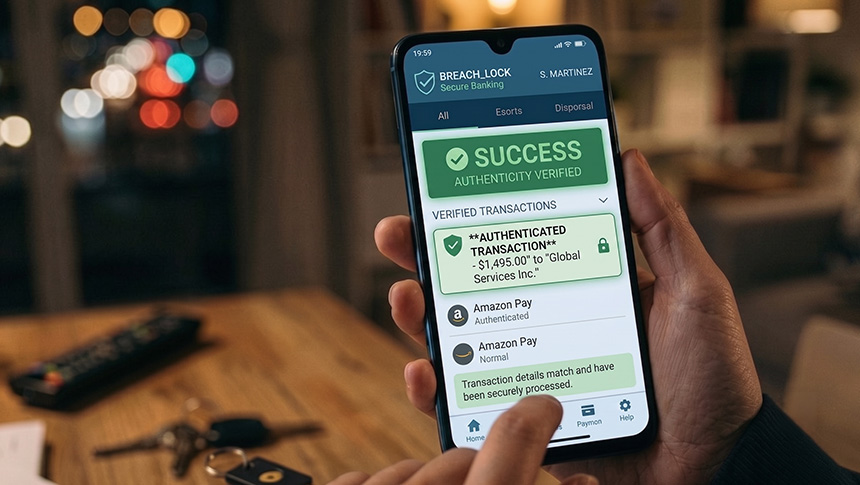
As mobile apps become central to business operations, security must evolve alongside them. Protecting backend systems alone is no longer sufficient. Organizations also need visibility into how apps behave in real-world conditions—across devices, networks, and environments they do not directly manage.
This requires extending security beyond development and into runtime, where apps are actively used and threats emerge in real time. Organizations must be able to detect attacks as they occur, prevent tampering and manipulation, and protect apps even when devices or environments have been compromised. In today's threat landscape, security can no longer end at deployment.
Closing the Gap
Mobile apps will only continue to grow in importance as businesses rely more heavily on digital transactions, mobile services, and app-based customer experiences. But as the role of the app expands, so does the attack surface.
Organizations are beginning to shift their focus beyond infrastructure and toward protecting the app layer itself—where real interactions, transactions, and customer trust now live. This shift requires security strategies that extend beyond development and deployment to address threats that emerge during real-world use.
Because today's attacks increasingly target the app layer itself, organizations need security solutions that can protect mobile apps throughout their entire lifecycle. Globe Business' Mobile Application Security, powered by Zimperium MAPS, is designed to support this approach by helping organizations secure apps from build to runtime, even in unpredictable environments.
Sources:
1https://www.statista.com/topics/1002/mobile-app-usage
2https://www.verizon.com/business/resources/reports/2024-dbir-data-breach-investigations-report.pdf
3https://zimperium.com/hubfs/Reports/2025%20Global%20Mobile%20Threat%20Report.pdf
4https://finance.yahoo.com/news/cybersecurity-solutions-market-research-report-150700809.html
5https://www.gartner.com/en/newsroom/press-releases/2024-02-22-gartner-identifies-top-cybersecurity-trends-for-2024
6https://www.guardsquare.com/blog/mobile-app-security-impacts-trust