In this article:
- Cutting Down on Plastic Waste in Your Everyday Routine
- Creating a Lower-Waste Kitchen at Home
- Upgrading to Eco-Friendly Beauty and Hygiene Essentials
- Refreshing Your Wardrobe with More Sustainable Fashion
- Using Reusable Shopping Bags
- Recycling Plastic Waste the Right Way
- Supporting Greener Communities Through Recycling Programs
- Building Your Sustainable Habits at Home Today
Did you know that every piece of plastic ever made still exists in some form today? Plastic waste pollutes our oceans, and much of it is broken down into microplastics that end up in our food and water.
The good news is that you can make a difference and start a change, no matter how small. Even just practical changes at home can help reduce plastic waste, save money, and create healthier habits for your family.
Learn these simple ways to cut your plastic consumption and build a sustainable routine at home.
Cutting Down on Plastic Waste in Your Everyday Routine
Buying single-use sachet products may seem lighter on your budget, but the charges can actually add up as you keep buying them. Plus, the environmental costs are profound. Instead of buying products in tiny disposable packs, try larger refillable containers or buy essentials in bulk when possible.
You can buy your essentials in bulk at megastores near you or take advantage of an exclusive Landers voucher when you shop if you’re a Globe Postpaid customer.
Creating a Lower-Waste Kitchen at Home

The kitchen is one of the biggest sources of household plastic waste. Luckily, just a couple of simple swaps can make your kitchen more eco-friendly and reduce your household’s daily waste.
- Use reusable food covers such as beeswax wraps.
- Replace disposable sponges with a loofah or cellulose sponge.
- Choose glass, wood, or metal kitchen tools.
- Create DIY household cleaners like vinegar and baking soda.
- Reduce single-use food packaging for snacks or meal prep.
Some local government units (LGUs) and stores also offer refill stations for household essentials or "bring your own bottle" programs that help reduce the need for single-use plastic containers. Check whether similar programs are available in your area and consider participating.
Upgrading to Eco-Friendly Beauty and Hygiene Essentials

Sustainable living means leveling up a self-care routine, which is very practical. More brands now offer low-waste alternatives that fit everyday routines.
- Go with organic shampoo bars.
- Look for products with refillable packaging.
- Switch to a bamboo toothbrush or reusable cotton pads for makeup removal.
- Use reusable facial wipes and tissues.
- Swap your regular pads with reusable menstrual products such as menstrual cups and period underwear.
Refreshing Your Wardrobe with More Sustainable Fashion

Did you know that synthetic fabrics like polyester and nylon can release microplastics during washing? Fortunately, there are many alternative fabrics you can use. Explore these fabric types for your next sustainable fit.
- Cotton
- Linen
- Hemp
- Silk
- Tencel
Pro Tip: You can buy second-hand clothes instead of buying something new. This helps you save money while reducing textile waste and lessening the demand for new plastic-based fabrics for clothing.
Using Reusable Shopping Bags
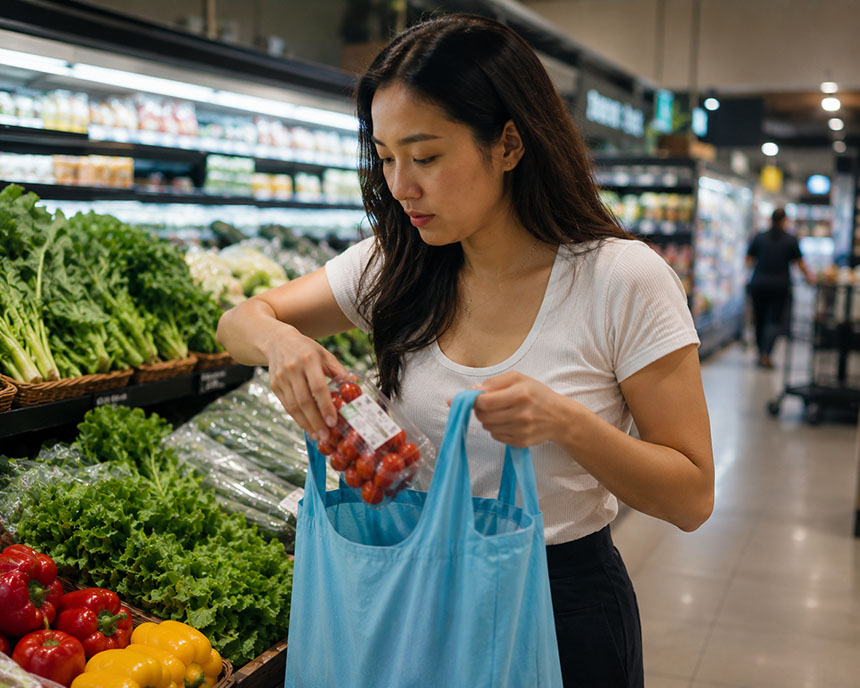
Single-use plastic bags are one of the most common sources of plastic waste. They’re often used for just a few minutes but can take hundreds of years to break down.
Whenever you go to the grocery store, mall, or local market for your grocery runs, you can use:
- Woven bags, which are sturdier and reusable material
- Eco-bags that malls usually give out when you bulk-buy. They’re durable and resilient.
- Bayongs made from natural fibers such as pandan or buri. They’re eco-friendly and built to last long.
Recycling Plastic Waste the Right Way

Recycling becomes more effective when waste is properly cleaned and sorted. If you have recyclable materials at home, you can clean them out thoroughly and turn them into sustainable home decor, like:
- Plastic bottles for hanging planters for your small and flowering plants
- Tin cans for pens, utensils, or makeup organizers
- Old glass jars for flower vases or candle holders
With a mindful habit like this, you upcycle waste rather than just throwing it away and buying something new. This helps you save on costs while making your home more sustainable.
Supporting Greener Communities Through Recycling Programs

Turn your home habit to be even more sustainable by taking part in different environmental projects in your community. Getting involved in any (or all) of these makes sustainable living feel more achievable and more rewarding.
- Bringing your own plastic and electronic waste to recycling programs like Smart Recycle Ph or Tapon to Ipon
- Supporting recycling efforts like “trash-to-cash” initiatives
- Joining local clean-up drives
Building Your Sustainable Habits at Home Today
Living more sustainably doesn’t have to feel overwhelming. With your simple daily habits, they compound into a bigger impact on the community.
Make your sustainable lifestyle easier by opting for digital options. Try switching to GCash for more convenient and paperless pay. Digital tools like GlobeOne app, also allow you to redeem perks and rewards without printed receipts.
A reliable GFiber plan can also support these habits, from managing cashless transactions to accessing online services that reduce paper-based processes. You can further maximize perks and discounts from your Go+ promos when purchasing grocery essentials online, making it easier to shop conveniently while supporting more streamlined, digital-first routines.
Remember, everything becomes connected. Your small, intentional, and informed decisions allow you to create a greener and healthier future for you, your family, and the community around you.