In this article:
Knowing how to apply for an ITR (Income Tax Return) may not be the most exciting part of freelancing, but it’s a necessary step in managing finances and staying tax compliant. Beyond legal requirements, your ITR serves as proof of income, which is crucial for loan applications, visa approvals, and financial credibility. Whether you're working from a café in Bali, a co-working space in Bangkok, or a beachside hut in Siargao, staying on top of your tax obligations is crucial to maintaining a legitimate and sustainable freelance career.
However, being a digital nomad presents many hurdles. Registering can be difficult without a physical business address and computing taxes from different clients and currencies can get complex. Not to mention limited access to physical government offices—filing paperwork in person may be difficult when you’re on the move.
If you’re a digital nomad or new to freelancing and putting off filing your taxes because it feels overwhelming, this guide will walk you through everything you need. Get ready to learn the basics of freelance tax in the Philippines, so you can navigate the process easily, even when you’re on the go.
Who Needs to Apply for an ITR?

If you’re a freelancer, self-employed professional, or consultant earning income in the Philippines, you’re required to file an ITR. These individuals also need to apply for an ITR:
- Working Filipino citizens living in the Philippines, regardless of income
- Individuals employed by at least two employers at any time during the taxable year
- Individuals who have mixed/hybrid sources of income
- Individuals who receive other non-business- or non-professional-related income aside from their compensation income
- Individuals who are employed and married and have withholding taxes, but their spouses don’t
- Marginal income earners
- Individuals with income tax during the past year, but weren’t correctly withheld
- Non-Filipino citizens currently earning an income in the Philippines
- Local corporations receiving income within or outside the Philippines
- Foreign corporations operating and receiving income from within the Philippines
An ITR for freelancers is essential to comply with government laws and access financial services like bank loans and government benefits. And yes, even if you work remotely from different locations, you’re still required to apply for an ITR and declare your earnings to the BIR if you’re a Philippine citizen earning an income. This applies even if most of your clients are international.
Staying tax compliant also helps freelancers protect their income, secure financial opportunities, and contribute to national development.
Who’s Exempt from Filing an ITR?
Not everyone is required to file an Income Tax Return (ITR). Under the TRAIN Law (Tax Reform for Acceleration and Inclusion), individuals earning ₱250,000 or less annually are exempt from income tax. This includes minimum wage earners and those whose income falls below the taxable threshold. Full-time employees with no extra freelance income are also exempt, as their taxes are already withheld by their employer.
Additionally, those earning only from passive income don’t need to file. While filing isn’t mandatory in these cases, having an ITR can still be useful for travel purposes, bank loans, and financial transactions—especially for digital nomads managing income from multiple sources.
The ITR Application Process for Freelancers
Filing your ITR starts with registering as a taxpayer. Here’s a step-by-step guide on how to apply for an ITR:
1. Register with the BIR.
Before you file an ITR, you need to register as a self-employed taxpayer with the BIR and get a TIN (Tax Identification Number). You must be able to fulfill the following requirements and submit them to your nearest Revenue District Office (RDO) or online through ORUS:
- Completed BIR Form 1901 (application for registration for self-employed individuals) for your TIN
- Government-issued ID (e.g., passport, driver’s license)
- Proof of address (utility bill or lease agreement). If you’re a digital nomad, you’ll need to use a Philippine address such as your family home.
- If you’re a professional, give an Occupational Tax Receipt (OTR) or Professional Tax Receipt (PTR).
- Annual registration fee of ₱500
- Certificate of Registration (COR) for the authority to print receipts
You may need to attend a taxpayer’s briefing too. Once registered, you’re officially a BIR-recognized taxpayer and can start issuing receipts for your services.
2. Track your income and expenses.
As a freelancer, you’re responsible for keeping your expenses and earnings in check. Having these on hand and organized is crucial, not only for fulfilling ITR requirements but also for maximizing deductions that can lower your taxable income.
Common expenses include:
- Internet, phone, and utility bills
- Rent (only if you have a home office)
- Office supplies
- Software subscriptions
- Business-related travel and training fees
Recording your expenses ensures you only pay tax on your net income, and not your total earnings.
3. Calculate your taxable income.
To determine how much you need to pay, you’ll need to do the following:
- Calculate your gross income or the total amount you’ve earned from freelance work.
- Deduct allowable expenses. You can either use itemized deduction (subtract business expenses with receipts) or Optional Standard Deduction (OSD) to automatically deduct 40% of gross earnings—no receipts needed.
Once you have your taxable income, choose between Graduated Tax Rate (GTR) or 8% Flat Tax. Income between ₱250,001 and ₱400,000 is taxed at 20%, and ₱400,001 to ₱800,000 at 25%. The 8% Flat Tax applies a straightforward 8% tax on earnings exceeding ₱250,000.
If your earnings involve multiple currencies, hiring an accountant can help simplify your calculations.
4. How to file or apply for ITR online?

Whether you’re based locally or a digital nomad, you can enjoy the convenience of filing your ITR electronically through eBIRForms or the Electronic Filing and Payment System (eFPS). To file your ITR via eBIRForms, follow these steps:
- Download and install eBIRForms from the BIR Website.
- Select BIR Form 1701 (for freelancers).
- Fill out the form and click “Submit.”
- Pay your tax using GCash or online bank transfer.
5. Keep your tax records and receipts.
After filing, make sure to save both a physical and digital copy of your ITR and payment receipt if possible. These may be needed for applying for a visa, getting approved for a bank loan, or securing government benefits.
Other Taxes Freelancers Working in the Philippines Must Pay

Annual registration tax: It refers to employees, businesses, and freelancers paying the registration fee of ₱500 and accomplishing the BIR Form 0605 or payment form. This is a yearly requirement for all taxpayers and needs to be completed whenever they pay taxes that don’t require a tax return. The deadline to file is January 30th of every year.
Monthly percentage tax: Your monthly percentage tax makes up 3% of your gross revenue. This percentage tax is required for VAT-registered businesses and self-employed or mixed-income individuals. BIR 2551M or the Monthly Percentage Tax Return and 0605 forms are needed for this filing, which is due every 20th of the month.
Quarterly income tax: With a rate between 2% and 30%, quarterly income tax is a must for self-employed and mixed-income individuals with gross annual sales not exceeding ₱3 million. Unlike monthly percentage taxes, VAT-registered businesses are exempt from this category. The deadline for submission is on the 25th of the last month of every quarter.
Annual income tax: The annual income tax rate is based on the BIR’s graduated income tax rate table or the 8% preferential tax rate. Self-employed and mixed-income individuals will have to establish their rates on what applies to their situation and whether their total gross doesn’t exceed ₱3 million. If it does, they’re limited to the graduated income tax rate table; if it doesn’t, they can opt for either the graduated income tax rate or the 8% preferential tax rate.
Knowing how to apply for an ITR as a freelancer may seem complicated at first, but with proper preparation, record-keeping, and online filing options, it’s easier than it seems. By following this guide, you can file your ITR with confidence, stay compliant with tax regulations, and enjoy the financial perks of being a responsible taxpayer.
Plus, digital payment options like GCash make the process even more seamless. Instead of visiting a bank or BIR office, you can conveniently pay your taxes online with fiber-fast home internet. And if you’re a digital nomad managing finances on the go, make sure you have reliable connectivity with a Globe postpaid plan or prepaid promo. Then, simply log in, go to "Pay Bills," select "BIR," enter your details, and complete your payment in minutes.


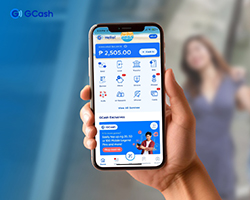


Filing taxes may not be the highlight of freelancing, but with the right tools, it’s one less thing to worry about.


