In this article:
What’s the Civil Service Exam?

The Civil Service Exam (CSE), officially known as the Career Service Examination, is the official test administered by the Civil Service Commission (CSC), the primary government agency responsible for managing government employees. This required exam is administered several times a year and assesses your eligibility for government employment.
The Civil Service Exam comes in two levels.
- Sub-Professional Level: This is generally for people aiming for first-level government jobs. Think of roles like clerical, administrative, or custodial work, which usually don't require a four-year college degree. For this test, you get 2 hours and 40 minutes to answer 165 questions.
- Professional Level: This level qualifies you for a wider range of government jobs—both first- and second-level positions such as technical, professional, or managerial. Passing the Professional level is key to these higher roles. However, while you don't need a bachelor's degree to take the exam, you typically need one to be appointed to second-level positions in government. For this exam, you get 3 hours and 10 minutes to answer 170 questions.
For both the Professional and Sub-Professional levels, you need to achieve a general rating of at least 80% to pass the exam and earn your eligibility.
Additionally, the Civil Service Commission has special programs like the Brightest for the Bureaucracy Program (BBP) to attract highly qualified individuals, including top exam passers and honor graduates, into public service.
Exam Schedule Overview
Planning to take the Career Service Examination—Pen and Paper Test (CSE-PPT)? The exam is usually held twice a year, around March and August, with applications opening about two to three months before and closing roughly a month prior. Acceptance of applications is usually on a first-come, first-served basis, and CSC offices may close acceptance before the deadline if they reach their target number of applicants. So, apply early!
Benefits of Passing the Civil Service Exam

Taking the Civil Service Exam is more than just fulfilling a requirement; it's an important step toward building a stable and rewarding career in public service. Here's why it's essential.
- You can work across government agencies. Passing the exam makes you eligible for positions in national agencies, local government units (LGUs), and government-owned and controlled corporations (GOCCs), giving you flexibility in where to build your career.
- You qualify for permanent jobs. Passing makes you eligible for permanent government positions (plantilla items), giving you stronger job security than temporary or contract roles.
- You have access to great benefits. As a permanent employee, you typically get a comprehensive benefits package. This often includes health insurance (PhilHealth), retirement plans (GSIS), housing fund benefits (Pag-IBIG), paid leave credits, and various allowances.
- You grow your career. Eligibility is often required to get promoted to higher-level government jobs. It also opens doors to training opportunities and helps you build diverse civil service careers.
- You get a fair chance based on merit. This exam system helps ensure hiring focuses on your skills and qualifications, not just connections. It gives qualified Filipinos equal opportunity to enter public service.
- You gain a competitive edge. Civil service eligibility gives you a real advantage over non-eligible applicants when applying for permanent government positions.
Who’s Qualified to Take the Civil Service Exam?

To qualify for the Civil Service Exam, you need to meet these basic qualifications.
- You must be a Filipino citizen.
- You must be at least 18 years old on the day you file your application.
- You must be of good moral character.
- You must have no conviction by final judgment for any serious offense. This includes crimes involving dishonesty, immoral conduct, exam cheating, drunkenness, or drug addiction.
- You must not have been dishonorably discharged from military service.
- You must not have been fired for valid cause (like misconduct) from any government position.
- You must not have taken the same level of exam (Professional or Sub-Professional), either Pen-and-Paper (PPT) or Computerized (COMEX), within the three months right before your new exam date.
Exemptions: Based on special laws and CSC rules, certain individuals already have civil service eligibility and are exempt from the exam. They often include licensed professionals (PRC board/Bar passers), college graduates with Latin honors (e.g., Cum Laude, Magna Cum Laude), qualifying Sanggunian Members, Barangay Health Workers, and others. Check the complete list and requirements on the CSC website to see if you qualify for an exemption.
Exam Coverage and Scope

Knowing the scope of the exam helps you prepare effectively. Both the Professional and Sub-Professional levels cover the following general areas, presented in English and Filipino.
Verbal Ability
- Grammar and Correct Usage
- Vocabulary
- Paragraph Organization
- Reading Comprehension
Numerical Ability
- Basic Operations (Addition, Subtraction, Multiplication, Division)
- Identifying Patterns and Number Series
- Word Problems
General Information
- The Philippine Constitution (Salient Features)
- Code of Conduct and Ethical Standards for Public Officials and Employees (R.A. 6713)
- Peace and Human Rights Issues and Concepts
- Environment Management and Protection
Level-Specific Topics
In addition to the core subjects, each level tests some unique skills.
- Professional Level Only: Expect extra questions on Analytical Ability, such as the following.
- Word Association (Single and Paired Analogy)
- Identifying Assumptions and Conclusions
- Logic (Deductive and Inductive Reasoning)
- Data Interpretation (Tables, Graphs)
- Sub-Professional Level Only: This also includes Clerical Ability covering the following.
- Filing (Alphabetical, Numerical)
- Spelling
Modes in the Civil Service Exam
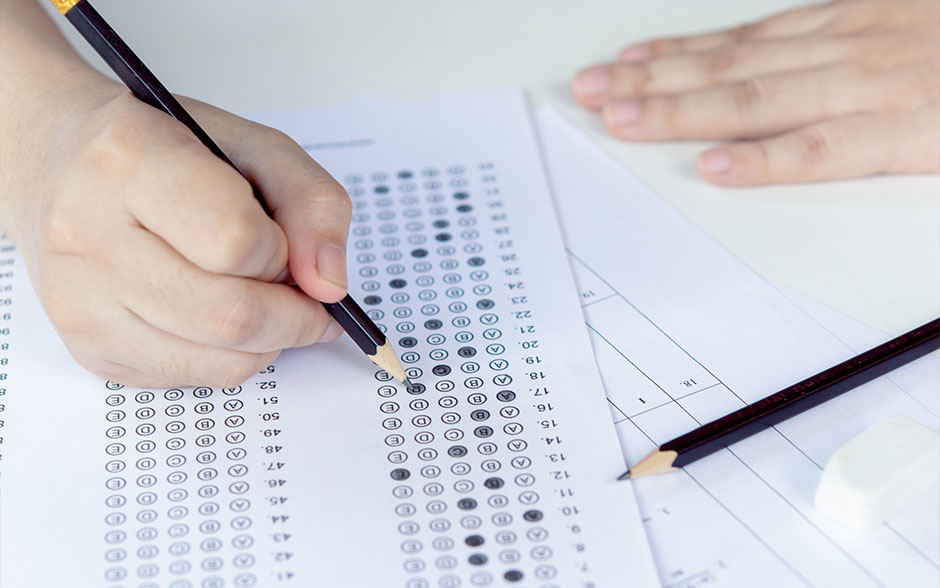
You can take the CSE in two ways.
- Pen-and-Paper Test (PPT): You'll use a test booklet and shade your answers on an answer sheet using only a black ballpen. The fee is usually ₱500, and you typically get your results about 60 days (around two months) after taking the test. To find your nearest testing center, visit the Civil Service Commission website or contact the CSC Regional Office or Field Office where you intend to take the exam.
- Computerized Examination (COMEX): This option lets you take the exam directly on a computer at an official CSC testing center. The fee is generally higher, at around ₱680, but the advantage is faster release of civil service exam results, which is 24 hours for individual results via email and about one week for posting on the official CSC website. Remember that COMEX slots can be limited and have separate schedules from the PPT.
Civil Service Exam Requirements

Image Credit: CSC Website
To apply, you need to prepare the following requirements.
- Fully Accomplished Application Form: Use the appropriate CS Form No. 100, which is downloadable from the CSC website or available at CSC offices. Ensure you use the latest version.
- Recent ID Photos: Prepare four identical passport-sized photos (4.5cm x 3.5cm) taken within the last three months before applying. These must be colored photos on good-quality paper with a plain white background. It should show your full, bare face without glasses, hats, masks, or accessories covering features, and make sure both ears are visible. Each photo requires a handwritten name tag (First Name, M.I., Last Name, Extension) positioned about 1 inch below your chin, where you sign over your printed name. Photo studios are often familiar with these specific CSC requirements if you mention the exam.
- Original and Photocopy of a Valid ID: Bring one valid, unexpired government-issued ID that clearly shows your full name, picture, date of birth, and signature, along with a clear photocopy of it. Common examples include your Driver's License, Passport, UMID, SSS ID, PRC License ID, Voter's ID, PhilHealth ID, Postal ID, NBI Clearance, etc. Refer to the official and updated list of accepted IDs provided by the CSC.
- Examination Fee: Prepare the fee, confirming the current amount listed in the official CSC announcement before applying.
- Certificate of Consent: Submit a signed Certificate of Consent, which is downloadable from the CSC website. This depends on the application method, especially if applying online via Online Civil Service Examination Application System (OCSEAS).
- Slot Reservation Receipt (for Computerized Examination examinees): Keep a printed copy of this in case you need to present it on exam day.
Applying for the Exam

The civil service exam application process varies slightly depending on the mode (PPT or COMEX) and whether applications are manual or online. Always check the specific announcement for your chosen exam date on the CSC website.
For PPT (Manual Filing):
- Submit your completed application form and requirements personally to the CSC Regional Office or Field Office where you intend to take the exam. Check the CSC directory for locations.
- You’ll likely sign and affix your thumbprint on the form in the presence of a CSC processor.
- Once verified and accepted, pay the test fee at the cashier.
- Receive your examination slip containing important details about your schedule and testing venue.
For COMEX (Online Application via OCSEAS):
- Visit the official CSC website or the specific OCSEAS link provided in the exam announcement.
- Create an account and activate it via email.
- Log in and carefully update your profile information. Ensure accuracy, especially name and birth details, matching the Philippine Statistics Authority (PSA) records.
- Select your preferred testing center, date (if applicable), and exam level (Pro/Sub-Pro).
- Fill out any additional required details.
- Upload scanned copies of your requirements (ID photos with specifications, valid ID, Certificate of Consent). Ensure clear uploads.
- Submit the application and wait for confirmation or further instructions from the CSC office on payment and final steps. Payment may be made through GCash or other CSC-authorized channels. You might still need to appear personally at a CSC office for verification or biometrics capture for COMEX.
- Print any required reservation confirmation or examination slip.
Tips Before, During, and After the Exam

Boost your chances of success! Use effective study strategies, manage your time well on exam day, and stay prepared and confident.
Effective preparation goes beyond just knowing the requirements. Here are tips gathered from experience and successful examinees.
Before the Exam
- Know the coverage and review systematically. Don't just read the list of topics; understand what specific skills are tested, like grammar rules, problem-solving techniques, and constitutional principles. Use reviewers, but focus on understanding concepts, not just memorizing answers. Create study aids such as flashcards or notes.
- Take practice tests. Simulate exam conditions. Time yourself to improve speed and identify weak areas. Many resources online offer practice questions.
- Ask for advice. Talk to friends or relatives who have successfully passed the Civil Service Exam. Their insights can be invaluable.
- Research your testing venue. Know exactly where it is and how to get there. Visit beforehand if possible to avoid rushing or getting lost on exam day. Check for parking or public transport options.
- Prepare physically and mentally. Rest well the night before, fuel yourself with a healthy meal, and plan to arrive early to stay calm and collected. Walk into the exam room confident, focused, and ready to succeed.
During the Exam
- Arrive early. Testing venues usually open around 6:00 a.m., and gates often close strictly at 7:45 a.m. Allow ample travel time. This gives you time for verification and settling down.
- Bring the necessary items. Your Examination Slip or Application Receipt, a valid ID (strictly “No ID, No Exam!”), extra black ballpoint pens (for PPT, other types are prohibited), and perhaps a clear water bottle (check venue rules).
- Wear proper attire. Dress comfortably but appropriately. Avoid slippers, shorts, or sleeveless tops as per CSC rules.
- Listen to instructions. Pay close attention to the proctor's instructions regarding filling out forms, shading answers (for PPT), time limits per section, and rules about leaving the room.
- Manage your time wisely. Don't spend too much time on a single difficult question. If you're stuck, make an educated guess, mark it, and move on. Return to skipped items if time permits. Allocate your time per section.
- Read carefully. Understand each question and all options before answering. For PPT, ensure you’re shading the correct number on the answer sheet.
- Check your answers (if time permits). Use any remaining time to review your answers and catch potential errors.
After the Exam
- Be patient for results. Wait for the official release of the Civil Service Exam results through the CSC website or via the email notification sent by the CSC.
- Claim your eligibility. If you pass, CSC will announce instructions on how to claim your Certificate of Eligibility (CoE) or request a temporary certification. Bring a valid ID, accomplish the request form at the CSC office, and pay the ₱100 processing fee. Some offices may require an appointment, so check CSC advisories before visiting.
Time to Start Studying
Preparing for the Civil Service Exam takes dedication, but the reward—a stable, fulfilling public service career—is well worth it. Reviewing and applying online requires a stable internet connection. Find countless resources online to help you prepare and ace the CSE. For uninterrupted studying, choose GFiber Prepaid for pay-as-you-go convenience or explore consistent speeds monthly with GFiber Postpaid. Remember to check the CSC website for any updates.





Now that you understand the process, requirements, and what the Civil Service Exam covers, it’s time to hit the books and focus on your preparation. Good luck with your exams!


