In this article:
Looking for a unique and meaningful Holy Week experience? If so, consider taking a trip to Marinduque and experience the Moriones Festival.
From Palm Sunday, March 29, 2026, to Easter Sunday, April 5, 2026, the island transforms into a lively stage where you can witness biblical stories of transformation come to life through parades and performances. Join this week-long event and discover the meaning behind Marinduque's most cherished celebration.
The Moriones Festival’s History: Longinus' Legacy
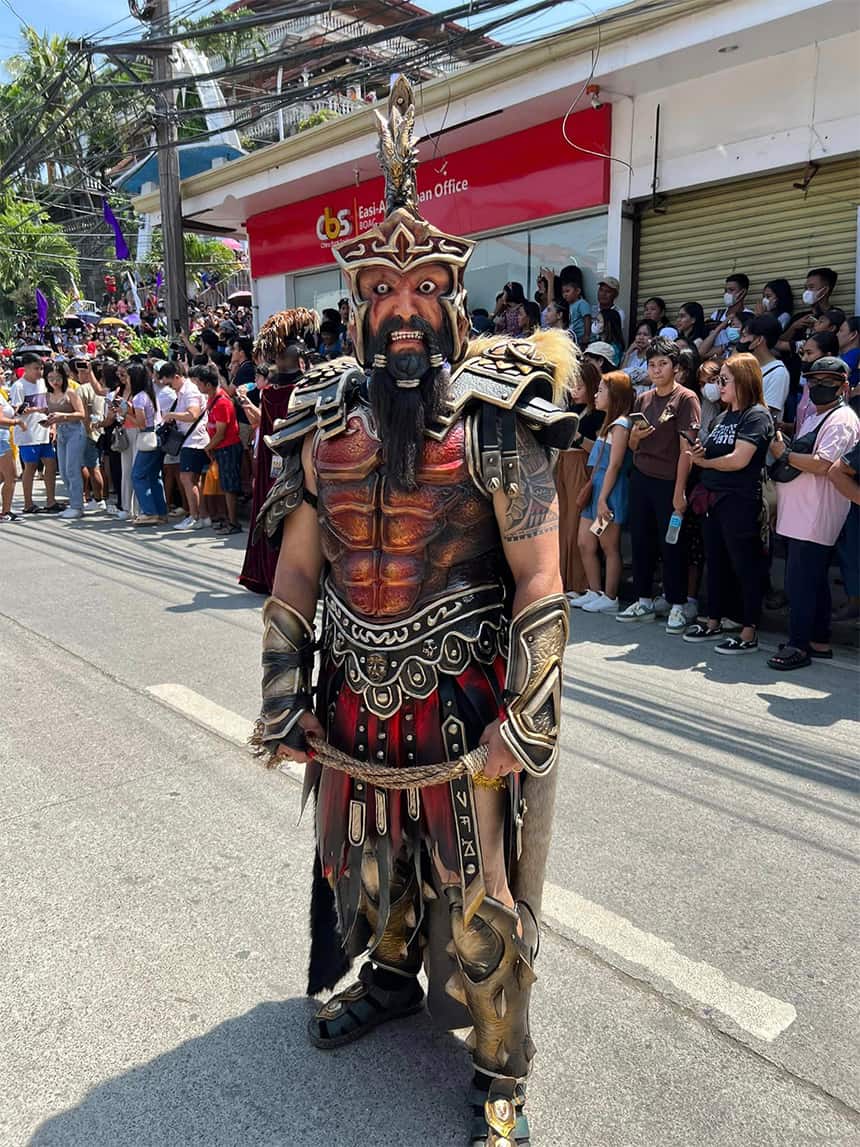
The Moriones Festival began during the Spanish period when Father Dionisio Santiago, a priest in Mogpog, Marinduque, envisioned a unique way to celebrate Holy Week. He initiated a tradition where men dressed up as Roman soldiers and wore masks and helmets.
They re-enacted the story of Longinus, a Roman centurion who was blind in one eye. When Longinus pierced Christ's side on the cross, a drop of Jesus' blood fell into his eye, restoring his vision and igniting his belief. Hunted for his newfound faith, Longinus was captured and beheaded—a tragic end that’s also portrayed in the festival.
Today, you can watch both men and women participate in the processions, walking in heavy costumes, helmets, and masks in the summer heat. This serves as a form of panata or penance, a way for them to show their remorse for their actions and seek redemption during Holy Week.
Beyond Penance: Celebrations of Faith and Culture
Named after the Spanish word for "helmet" (morrión), the Moriones Festival started as a way of teaching the story of Christ's passion and resurrection through Longinus’ story. Over the years, it grew and changed, reaffirming people’s faith through the festivities.
Beyond its origins, the festival has grown into a rich cultural experience that blends faith, storytelling, and community traditions. As you explore the island, you’ll encounter a variety of activities that bring these elements to life: from solemn rituals like the Pabasa ng Pasyon to dramatic reenactments such as the Pasyong Dula.
Here are some of the most well-known highlights you can experience during the festival.
Moriones Procession or Paglalakbay (Search for Longinus)
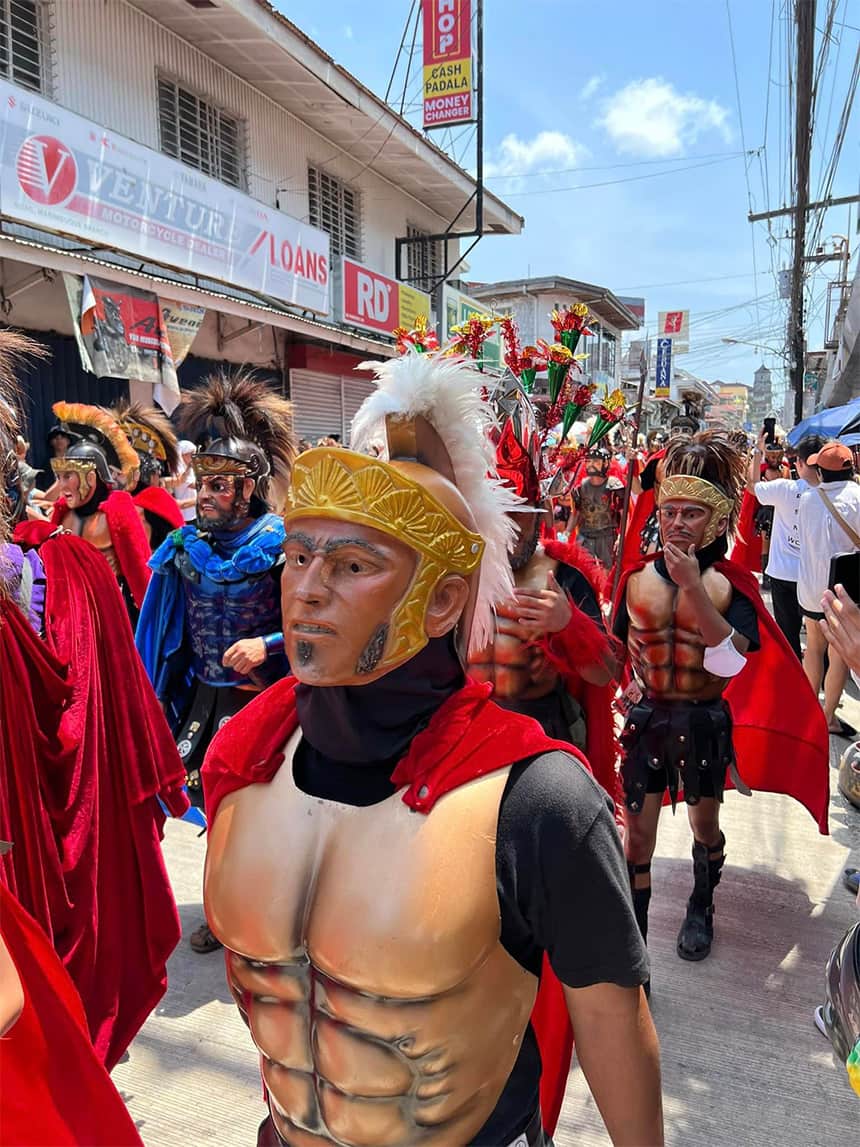
Witness a week filled with parades of people dressed as Roman soldiers. During the Paglalakbay, excitement builds as the soldiers search for Longinus, whose conversion to Christianity is viewed as an act of betrayal.
Catch the Morion Parade in the following towns:
Town | Event Name | Schedule |
Boac | Morion Parade (MISTAH, KMMK, Legion) | March 30, 2026 (Holy Monday), 4:00 p.m. |
Gasan | Parada ng mga Moryon (Poblacion) | March 30, 2026 (Holy Monday), 2:00 p.m. |
Torrijos | Morion Parade (Poblacion) | March 31, 2026 (Holy Tuesday), 6:30 a.m. |
Buenavista | Morion Parade | March 31, 2026 (Holy Tuesday), 3:00 p.m. |
Via Crucis (Way of the Cross)
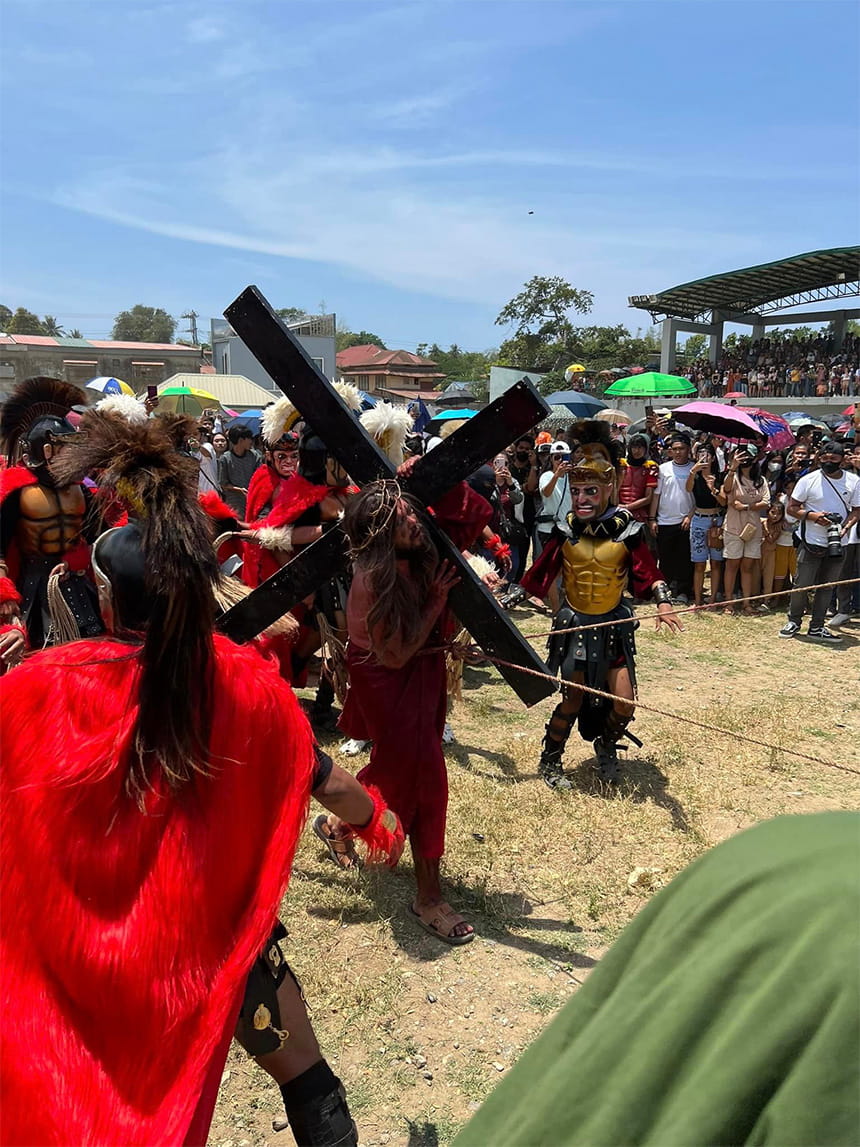
On Good Friday, you can watch a moving reenactment of Jesus Christ's suffering and crucifixion. Walk alongside the procession as different scenes unfold on the streets, reminding you of Christ’s love and sacrifice.
Watch Via Crucis in the following towns.
Town | Event Name | Schedule |
Boac | Kalbaryuhan (Via Crucis) | April 3, 2026 (Good Friday), 9:00 a.m. |
Mogpog | Pagpapako kay Kristo (Via Crucis) | April 3, 2026 (Good Friday), 12:00 p.m. |
Pugutan: The Beheading of Longinus
The Moriones Festival reaches a dramatic climax with the pugutan, a reenactment of the beheading of Longinus. During the pugutan, different Moriones (masked penitents) take turns portraying Saint Longinus and his execution, bringing his story to life through this symbolic act.
Witness Pugutan in the following towns.
Town | Event Name | Schedule |
Boac | Pugutan | April 4, 2026 (Black Saturday), 7:00 p.m. at Moriones Arena |
Gasan | Pugutan Play | April 3, 2026 (Good Friday), 7:00 p.m., 1st part at Guingona Park |
Torrijos | Pugutan: The Story of Longinus | April 5, 2026 (Easter Sunday), 9:00 a.m. |
Mogpog | Pagpupugot at Paglilibing kay Longino | April 5, 2026 (Easter Sunday), 9:00 a.m. |
While the core story of Longinus unites the festival, each town in Marinduque adds its own unique flair. See the complete schedule of activities in each town.
The Morion Mask: Art and Tradition
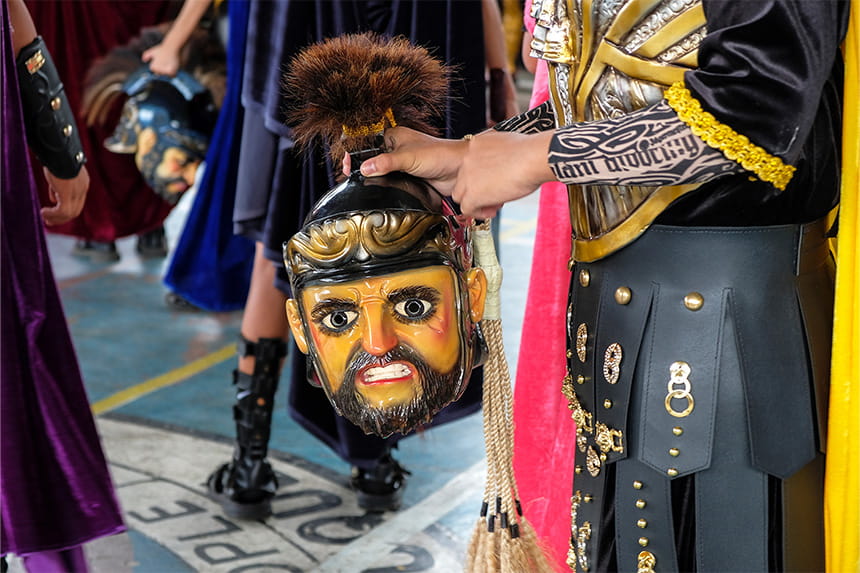
Skilled artisans in Marinduque carry on the complex tradition of mask-making, passing down the techniques through generations. The process involves carving wood, then meticulously layering lacquer and intricate details to bring these fierce faces to life. In some regions, the mask's ornamentation even tells a story—the more elaborate the decorations, the more often the wearer has participated in the festival.
If you’re inspired to create a mask of your own, consider using papier mâché. You can find online tutorials to guide you through the process.
You can also find a premade papier mache masks online, offering a base for you to be 3creative with paint, embellishments, and other decorative touches. Just remember to respect the cultural and religious significance of the Moriones mask.
Celebrating the Moriones Festival
The Moriones Festival is not just an event; it's a vital part of Marinduque's heritage. It celebrates cultural identity, strengthens community bonds, and keeps religious and cultural traditions alive. By participating, you're becoming part of a legacy that has been passed down through generations.
As you take in these powerful traditions and moving performances, staying connected can help you make the most of your experience, whether you're checking schedules or capturing moments in real time.
Make sure you have access to your favorite social media apps with Go+ promos, so you can upload and share the festival’s vibrant scenes from your mobile device. Tourists can also consider getting a Traveler SIM to stay in touch with loved ones easily.
With the right tools, you can fully immerse yourself in the Moriones Festival. More than just a trip, it becomes a deeper journey that can inspire you to explore more of the Philippines’ festivals and plan your next meaningful adventure.