In this article:
- Yebisu Garden Place
- Tokyo Disneyland
- Akihabara
- Fushimi-Inari Shrine
- Arashiyama Bamboo Grove
- Peace Memorial Park
- Christmas Tree in Biei
- Churaumi Aquarium
- Universal Studios Japan
- Mt. Fuji
- Things to Keep in Mind When Traveling to Japan
- Say Yes to Japan Adventures
Yume no youna, or “dreamlike,” is one of many ways to describe Japan. It’s a place where tradition and modernity meet in fascinating ways, making a trip here feel almost surreal.
Peaceful temples and shrines stand alongside towering skyscrapers, while centuries-old customs continue to flourish in a country known for innovation. Whether you’re drawn to Japan’s history, scenery, cuisine, or pop culture, the “Land of the Rising Sun” rarely runs out of reasons for you to discover and fall in love with.
This travel guide takes you through 10 incredible Japan tourist spots, plus essential tips you should know. Tanoshinde! (Go have fun!)
1. Yebisu Garden Place
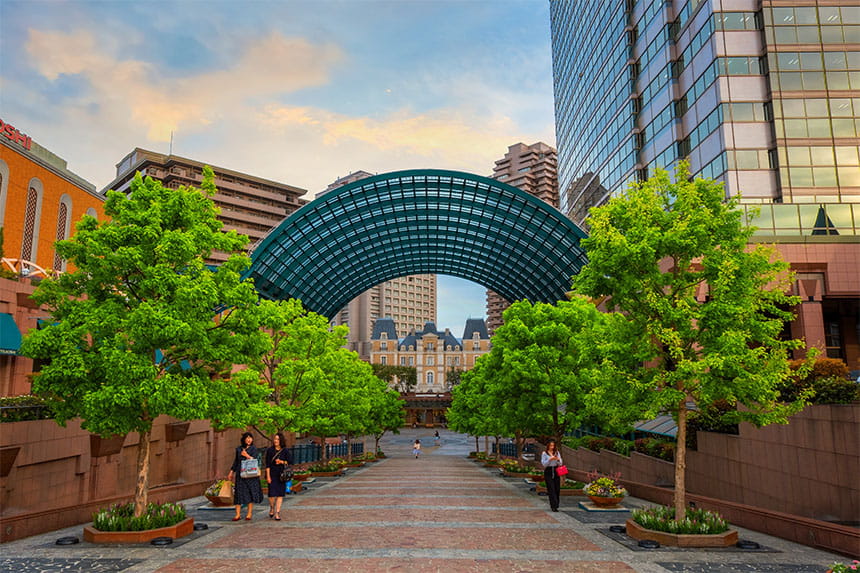
Known as a “city within a city,” Yebisu Garden Place brings a European-inspired plaza to Tokyo, blending leisure, culture, entertainment, and business into a single walkable complex. The site also has deep roots in Japan’s beer-making history as the former home of the brewery behind Yebisu Beer, which dates back to 1890.
Today, visitors can explore that legacy at Yebisu Brewery Tokyo, a brewery and museum that opened in 2024 and showcases the origins and science of brewing in Japan.
For fans of Japanese dramas, there’s another reason this place may feel familiar. Yebisu Garden Place is a key location in the live-action adaptation of Hana Yori Dango, based on Yoko Kamio’s hugely popular shōjo manga. Starring Jun Matsumoto of ARASHI, Inoue Mao, and Oguri Shun, the series became a massive hit in the mid-2000s.
Location: 4-20-20 Ebisu, Shibuya-ku, Tokyo, Japan
Hours: Open from 12 p.m. to 8 p.m. on weekdays but closed on Tuesdays. Open from 11 a.m. to 7 p.m. on weekends. The place is also closed during New Year holidays.
Entrance Fee: Free to visit. It’s one of Tokyo’s popular spots for travelers who want to sightsee without spending a yen.
2. Tokyo Disneyland
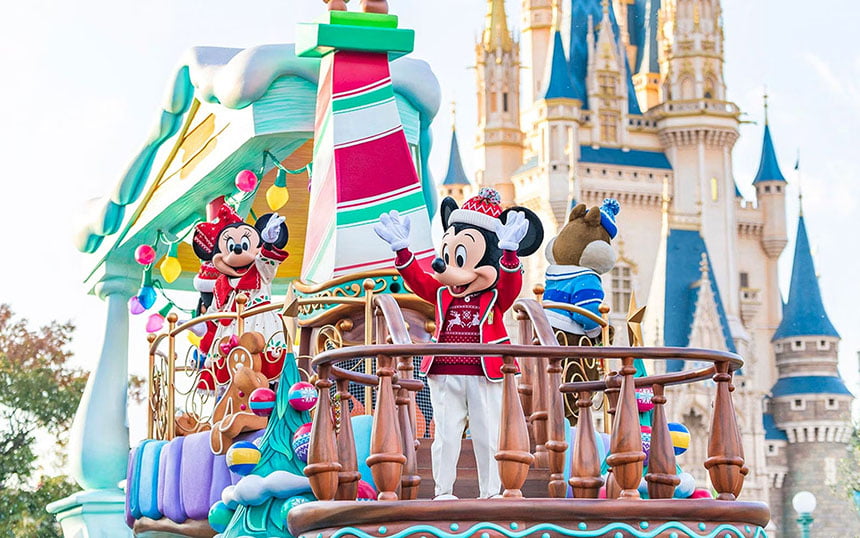
Image Credit: Tokyo Tickets
Stepping into Disneyland theme parks can instantly take you back to the joys of childhood. That pure, magical feeling extends to Tokyo, where the first-ever Disney park outside the United States opened in 1983.
Tokyo Disneyland brings together attractions such as its enchanting Cinderella Castle and unique collection of rides. You can also meet the iconic Mickey Mouse around the park or spot Toy Story crowd favorites like Woody and Buzz.
As the flagship park of Tokyo Disney Resort, it also features detailed themed areas, attractions, and live entertainment.
Location: 1-1, Maihama, Urayasu-shi, Chiba-ken, Tokyo, Japan
Hours: Open typically from 9 a.m. to 9 p.m.
Entrance Fee: 1-Day Passport prices vary depending on the admission date. Guests availing of rates for persons with disabilities (PWDs) must present an applicable disability certificate.
Ticket Type | Regular Price | PWD Price |
| Adults/Seniors | From ¥9,400 | From ¥7,100 |
| Juniors | From ¥7,800 | From ¥5,900 |
| Children | From ¥5,300 | From ¥4,200 |
| Kids ages 3 and below | Free | Free |
3. Akihabara
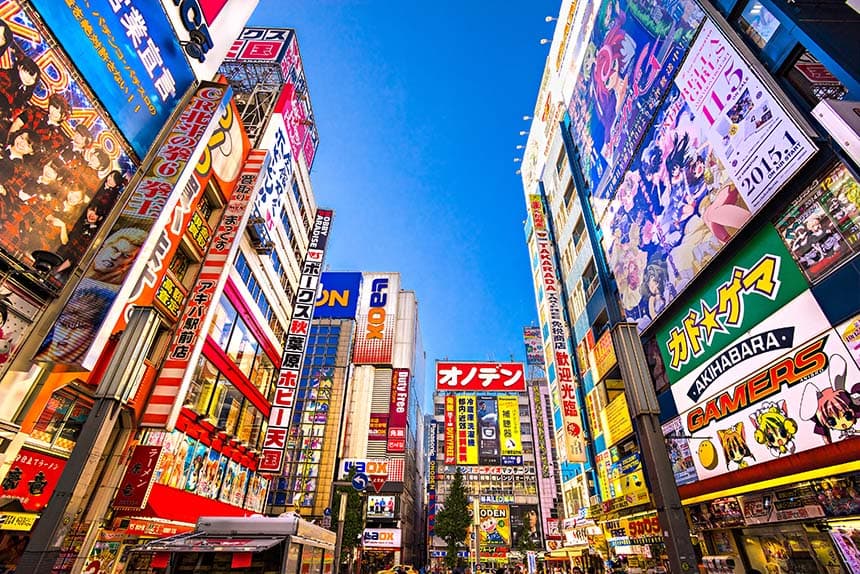
If manga, anime, gaming, and tech are your passions, Akihabara has plenty for you to explore. Often dubbed as “Japan’s Electric Town” for its long-standing association with electronics and gadgets, this lively district in central Tokyo has also evolved into a major hub of otaku culture. Its streets are also packed with specialty shops, themed cafes, and towering arcades. Fans can hunt for collectibles and rare figures from popular titles like One Piece, Demon Slayer, Jujutsu Kaisen, and Pokémon.
Since you’ll likely explore plenty of areas, going cashless can make shopping more convenient. With apps like GCash, you can breeze through supported payments and spend more time hunting for the merch that brings your favorite Japanese fandoms to life.
Location: Taito-ku, Tokyo, Japan
Hours: Open 24/7 daily. Individual shops, arcades, and cafes have varying operating hours
Entrance Fee: Free to visit. Admission fees may apply to individual attractions and entertainment venues.
4. Fushimi-Inari Shrine
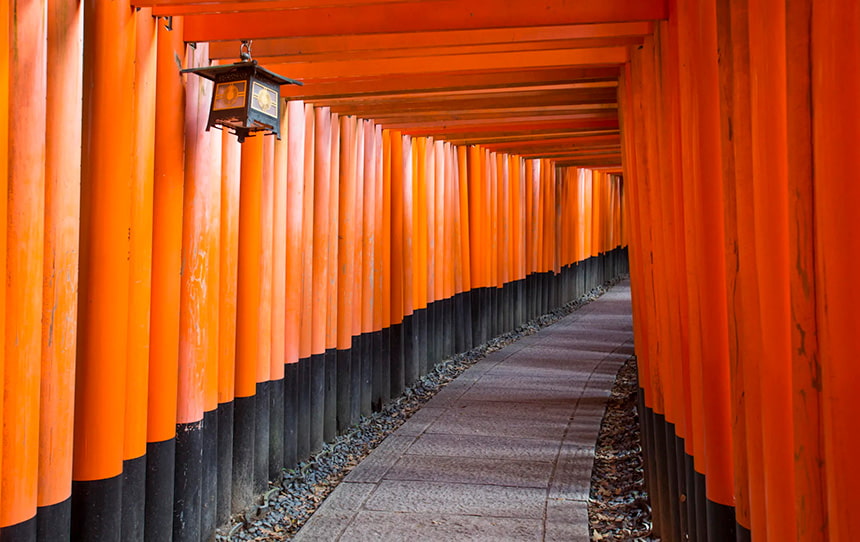
Image Credit: Travel Japan
A deeper look into Kyoto means finding the Fushimi-Inari Shrine. Founded in the 8th century, it’s a historic Shinto sanctuary dedicated to Inari, the deity traditionally associated with rice, agriculture, and prosperity. The shrine’s connection to rice is also reflected in Japanese foods like inari-zushi (sushi rice tucked inside seasoned tofu pouches) and kitsune udon (noodles topped with sweetened tofu), both available at tea stalls along the site’s approach.
Fushimi-Inari is among Japan’s most striking and popular free attractions, with hundreds of bright red-orange torii gates lining the path to this sacred site. You can even climb to the summit and offer your solemn prayers along the way.
Location: 68 Yabunouchi-cho, Fushimi-ku, Kyoto, Japan
Hours: Open 24/7 daily
Entrance Fee: Free
5. Arashiyama Bamboo Grove
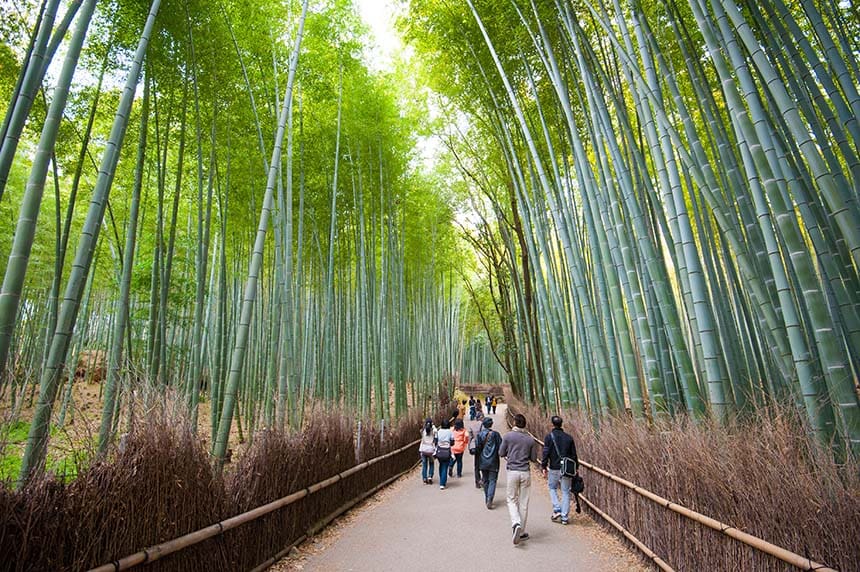
The combination of distinct form, traditional Japanese landscaping, and a tranquil atmosphere has made Arashiyama Bamboo Grove a celebrated symbol of Kyoto. Its defining feature is its dense canopy of giant moso bamboo, which sways gently in the breeze and filters sunlight into a soft green glow, making the forest a pleasant place to explore on foot.
Note that while photographs often capture a sense of solitude, the paths can become quite busy during peak tourist seasons. Early-morning visits can make the walk more comfortable and give you a better chance to appreciate the towering bamboo and the surrounding scenery.
Location: Ukyo-ku, Kyoto, Japan
Hours: Open 24/7 daily
Entrance Fee: Free
6. Peace Memorial Park
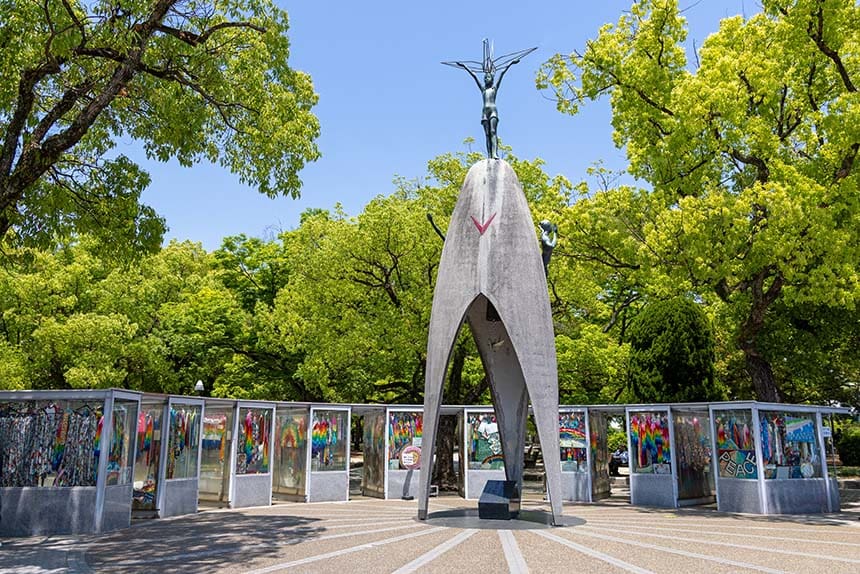
Japan today may be well-known for its influence on anime, manga, and pop culture, but a major part of its history is shaped by significant historical events, especially in Hiroshima.
One place to learn more about this history is Hiroshima Peace Memorial Park. Built in what was once the city’s fast-paced commercial and political center, the area has since been transformed into a quiet nook for remembrance, reflection, and peace, with a ceremony held every August 6.
The park also includes an indoor museum where visitors can explore photographs, artifacts, and personal accounts that offer a deeper understanding of Hiroshima’s past.
Location: 1-1-10 Ote-machi, Naka-ku, Hiroshima, Japan
Hours: The park is open 24/7 daily. Seasonal hours apply to the museum.
Entrance Fee: Admission to the park is free. Museum admission fees are as follows.
Visitor Type | Individual Rate | Group Rate |
| Adults/College Students | ¥200 | ¥160 per person for groups of 30 or more |
| High School Students | ¥100 | Free for groups of 20 or more |
| Junior High School Students and below | Free | Free |
| Ages 65 and above | ¥100* | ¥100 per person* |
*Visitors ages 65 and above must present official proof of age.
Note: For the museum, advanced reservations are required during opening and the last 90 minutes before closing.
7. Christmas Tree in Biei
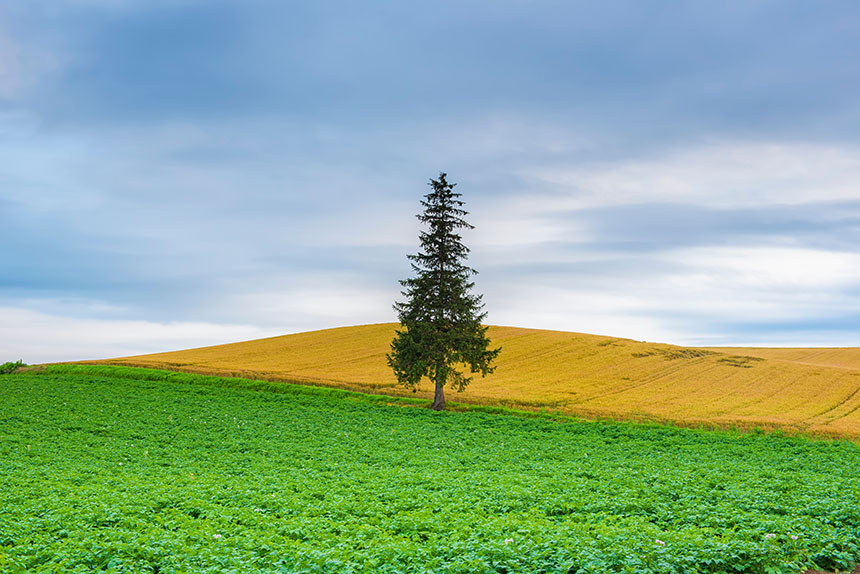
Hokkaido is a haven for outdoor lovers, with parks, hot springs, and ski resorts. While its capital city, Sapporo, where the snow festival is held, is a bustling urban center, you can also escape the city for a more laid-back getaway. Among them is Biei, a scenic town known for its rolling hills, flower fields, and picturesque countryside.
Here you can find a distinctive lone Christmas tree standing in the midst of wide-open farmland. When snow covers the field, its simple silhouette against the vast landscape makes for a perfect winter backdrop for a postcard-worthy photo.
Location: Bibaiushi, Biei Town, Kamikawa District, Hokkaido, Japan
Hours: Open 24/7 daily
Entrance Fee: Free
8. Churaumi Aquarium
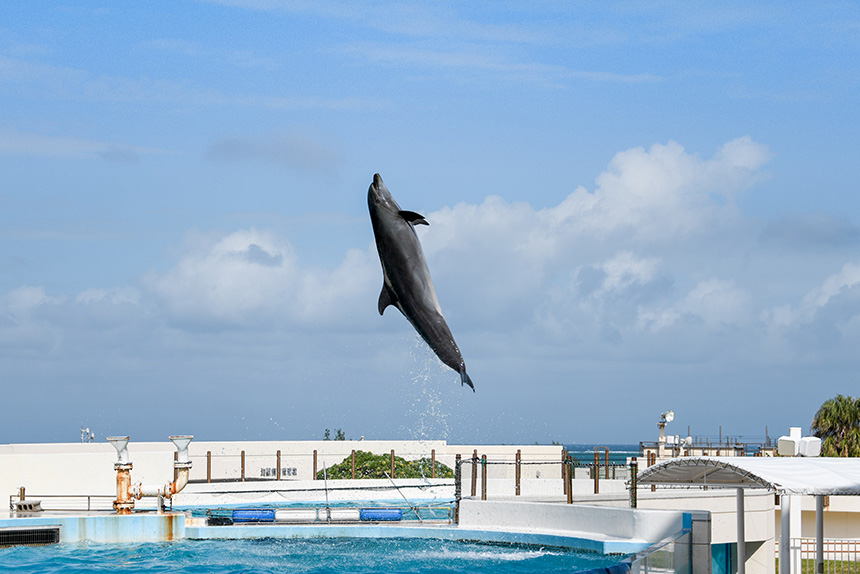
Located in the southern part of Japan and famous for its stunning beaches and surrounding waters, Okinawa is home to the Churaumi Aquarium. One of its highlights is the massive Kuroshio Sea tank, home to whale sharks and manta rays. The aquarium showcases more than 680 marine species, while outdoor areas feature dolphin programs and other attractions.
Location: 424 Ishikawa, Motobu-cho, Kunigami-gun, Okinawa, Japan
Hours: Open daily from 8:30 a.m. to 6:30 p.m., with extended hours during select peak seasons and holidays
Entrance Fee: Admission rates for Okinawa Churaumi Aquarium are as follows.
Visitor Type | Admission Fee |
| Adults/Seniors | ¥2,180 |
| High School Students | ¥1,440 |
| Elementary and Junior High School Students | ¥710 |
| Children Below 6 | Free |
| PWDs | Free |
9. Universal Studios Japan
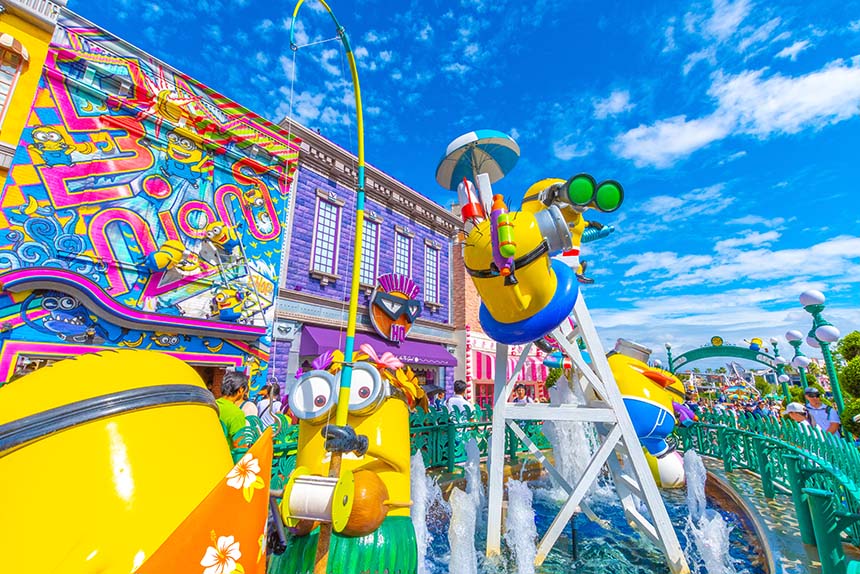
For theme park fans, Universal Studios Japan is another popular stop in Osaka. The park features action-packed rides, blockbuster attractions, and beloved fictional character meet-and-greets.
Grab your wand, broomstick, and a foamy Butterbeer sip at the Wizarding World of Harry Potter. Put your game face on and score points at Super Nintendo World. Get swept up in Minion mayhem at Minion Park. Soar over Jurassic Park on The Flying Dinosaur, or brave the waters of Amity Village with JAWS. Whichever you choose, there’s plenty of non-stop entertainment.
Location: 2-1-33 Sakurajima, Konohana-ku, Osaka, Japan
Hours: Open typically from 9 a.m. to 9 p.m., with seasonal and date-based variations
Entrance Fee: 1-Day Studio Pass prices vary depending on the admission date. Starting rates are as follows.
Visitor Type | Starting Price |
| Adults | ¥8,600 |
| Children | ¥5,600 |
| Seniors | ¥7,700 |
| PWDs | 50% off the Studio Pass price |
10. Mt. Fuji
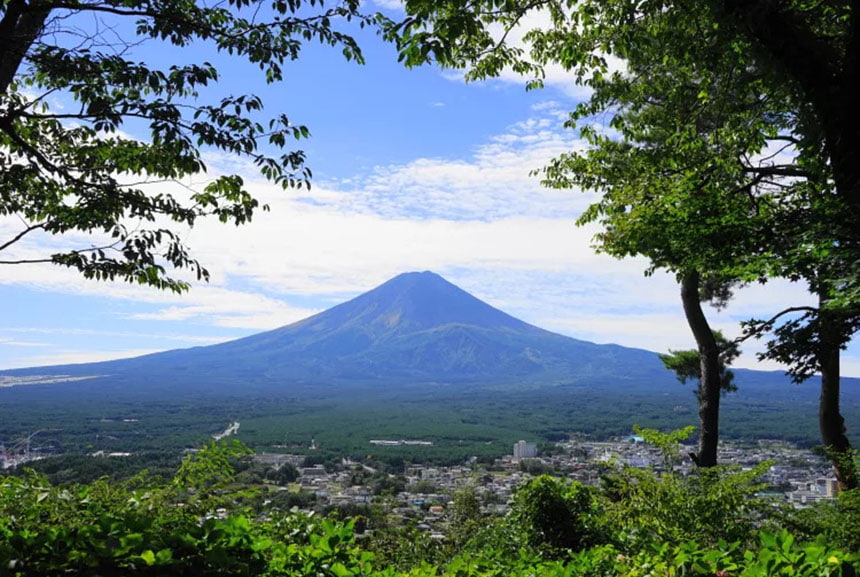
Image Credit: Travel Japan
Rising majestically above the Japanese landscape, Mount Fuji is a wonder that seems almost too perfect to be real. At 3,776 meters, it’s Japan’s highest mountain and one of the country’s most beloved natural landmarks. Its graceful cone changes beautifully with the seasons, making every moment spent here feel special.
The vicinity is just as rewarding, with serene lakes, lush forests, scenic viewpoints, and relaxing hot springs. If you’re exploring the Yamanashi side of Mount Fuji, don’t miss hōtō, a hearty local noodle dish served in a miso-based soup with vegetables.
Location: Between Yamanashi and Shizuoka prefectures, Japan
Hours: Open year-round for sightseeing and viewing. Summit climbing is seasonal, with trails generally open from July 1 to September 10, depending on the route and weather conditions.
Entrance Fee: Free to visit and view; a ¥4,000 hiking fee per person applies to those climbing the mountain during the designated climbing season. For more details, visit the official website.
Things to Keep in Mind When Traveling to Japan
Once you’ve picked your must-visit spots, a good Japan travel guide should also cover how to organize your route efficiently and prepare for the practical details of your trip.
- Plan your route by region. Group nearby tourist spots together in your itinerary to cut down on backtracking and travel time. You can also plan stops around shopping areas and local markets, so you can make the most of each neighborhood. For a longer stay, like a two-week Japan trip, you could spend several days exploring Tokyo and nearby destinations like Tokyo Disneyland and Mt. Fuji, then continue west to Kyoto, Osaka, and Hiroshima. If Hokkaido or Okinawa is also on your list, consider adding one as a separate stop and taking a domestic flight to make better use of your time.
- Study basic Japanese. English may not always be widely spoken, especially outside major tourist areas. So, brush up on some basic Japanese phrases and words ahead of your trip to overcome the language barrier, especially when asking for directions and exchanging warm greetings. Along with studying, it’s also a good idea to have a reliable mobile internet connection, like GoRoam Japan data options, ready for translation apps that can help you converse with locals, read signs, and navigate unfamiliar places.
- Pack according to the season. Japan experiences four distinct seasons, and the weather can differ significantly depending on when and where you go. It’s best to check the forecast before your trip and pack accordingly. For spring and cherry blossom season, carry a cardigan or light jacket, as temperatures can be cool in the mornings and evenings. Summer calls for soft, breathable clothing, while winter requires warm layers and a heavier coat. If you’re visiting during the rainy months, don’t forget a compact umbrella.
- Include practical travel essentials. Bring a reusable water bottle, pocket-sized toiletries, a portable power bank, a universal adapter, and other tech tools for your trip. Comfy walking shoes are also a must, especially if you plan to spend long days sightseeing.
- Be prepared to carry your trash. Public garbage bins are relatively uncommon in this country, so it’s a good idea to carry a small handy bag to temporarily store used wrappers until you find an appropriate place to dispose of them.
- Observe etiquette and customs. When visiting for the first time, learn about Japan’s local traditions. For instance, it’s a no-no to stick your chopsticks straight down into your rice bowl, as this resembles a practice done at funerals. Another one is to remove your shoes before stepping onto tatami floors. Some traditional Japanese restaurants have low tables and cushions, so look for a provided area to leave your footwear before entering.
- Avoid tipping. Tipping isn’t customary in Japan. Good service is simply considered part of the job, so leaving a tip can create confusion rather than appreciation. Simply paying the stated amount and saying “Arigatou gozaimasu!” (Thank you very much!) is enough.
- Check tattoo policies. Some onsens (Japanese hot springs) and other establishments may restrict entry for guests with tattoos or ask that tattoos be covered. Check the establishment’s policy beforehand and bring tattoo covers if needed.
- Follow public transportation rules. Japan’s trains and buses can get crowded, especially during rush hour. Keep your voice down and let passengers exit before boarding.
Say Yes to Japan Adventures
There’s a beautiful, well-known Japanese proverb, Senri no michi mo ippo kara, which translates to “Even a journey of a thousand miles begins with a single step.” The same goes for every unforgettable trip. It all begins with the courage to make up your mind.
So, if traveling to Japan has been sitting on your bucket list, let this be your sign to get your Japanese visa. Once you’ve decided to go, the next step is to prepare for a smooth, worry-free experience.
Booking roaming promos in advance through the GlobeOne app helps you enjoy greater peace of mind while overseas. That way, you’ll be roam-ready from the moment you arrive, whether you’re checking directions, updating your socials, or keeping in touch with your loved ones back home.
Choose from various prepaid roaming promos for flexible connectivity that fits your travel style and budget, or opt for postpaid roaming promos, with charges conveniently added to your monthly bill.
If you’re a mobile postpaid subscriber with an eligible All-New GPlan PLUS plan, you can also swap your data allowance for roaming services through the GlobeOne app without having to switch to a local SIM.
With the essentials sorted out, all that’s left is to look forward to the experiences ahead. Mata ne! (See you!) Have a Ja-fun vacation!